












“The best way to predict the future is to create it.” – Peter Drucker. Denis, Class of ’18, is one of those rare young entrepreneurs who didn’t wait for the perfect moment—he created one. During his community service year volunteering as a teacher at Kimaseki Secondary School, Denis took a step towards his entrepreneurial journey. Alongside teaching secondary classes, he supported Qualifying Test (QT) candidates who needed extra help beyond regular school hours. He began offering informal “table teaching” sessions, where students contributed a small tuition fee.
By the time he entered university, Denis had saved TZS 1.3 million—his first business capital. He began lending small amounts to fellow students receiving government loans, steadily growing his funds. While at university, Denis noticed a clear market gap. “I observed that many female students wanted to look stylish and presentable,” he explains, “but university life often comes with financial limitations.” Recognizing this mismatch between desire and affordability, he began importing handbags from Alibaba in small, affordable batches and selling them online.
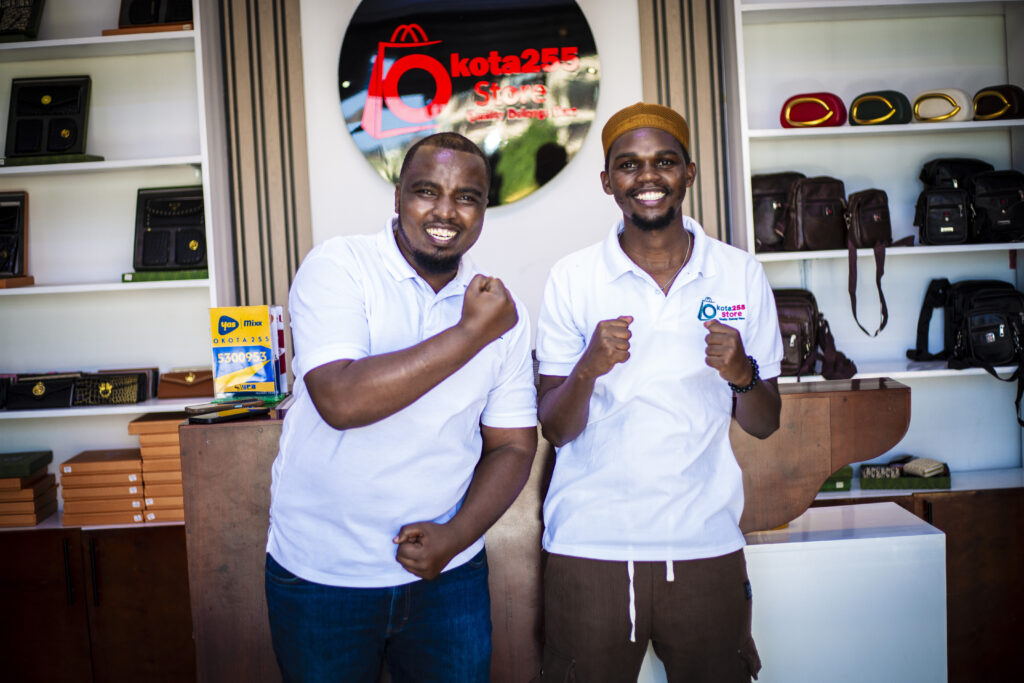
A key driver of this early growth was the support of his girlfriend, now his business partner. Her strong communication skills and natural rapport with other young women on campus helped build trust and expand their customer base. By his final year, Denis’s lending profits had grown to TZS 10 million, which was enough to open his first physical store. The shop combined two ventures: microfinance services and retail handbag sales. With both online and in-person customers, the business quickly gained momentum.
Trust became central to his lending operations. New clients typically provided collateral, often laptops or other valuables, while repeat customers-built credibility through consistent repayment. Loan amounts ranged from TZS 100,000 to 3 million, managed through close relationships and careful assessment. As demand grew, Denis began building a team, including fellow alum Ibrahim (Class of ’20). Staff roles also evolved alongside the business. A cleaner initially hired for maintenance soon became a sales assistant as customer traffic increased. By 2025, Denis expanded into a larger premises while maintaining the original location. By 2026, the team had grown further with two additional employees.
Wholesale soon emerged as a major opportunity. Through market research in Kariakoo, Denis identified a supply gap. Many wholesalers sold only in small quantities, while small vendors struggled to restock quickly. He also saw strong demand from regional customers seeking reliable access to affordable products.
“Recognizing this unmet need, I shifted focus toward wholesale in January 2025,” Denis explains. While retail remains part of the business, wholesale now drives most of its growth. A further turning point came through the TZS 21 million grant Denis received via the Next Frontier Incubator and Small Grants Program. The funding enabled him to expand inventory, introduce new product lines such as backpacks, and secure larger premises without operational strain.
Today, Denis runs a fast-growing handbag and wholesale business in Dar es Salaam, all initiated from savings earned while teaching during his community service year. No inheritance. No “perfect timing.” Just sharp observation, courage and action. His advice to fellow alumni? “Identify market gaps. Move quickly. Trade and importation still hold huge opportunity.”
For more impactful stories such as these, reach out via alumni@schoolofstjude.co.tz or call 0766200609.
