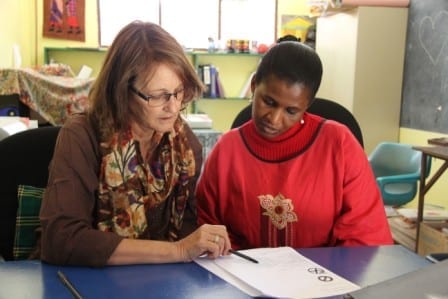
Susan Michell sits on a little children’s chair in a classroom with seven- and eight-year-old students. Having more than 30 years experience in primary, secondary and special education classes, she is here to demonstrate to St Jude’s teacher Robinson Mollel her suggestion how to use a set of flash cards that were donated to the school.
Susan pulls out the first card. It has the drawing of a stick figure behind a box with the word “behind” written above it. “Listen, look and speak,” Susan instructs the students. “Behind,” she says. “Behind,” they repeat in unison. She grabs a container, one of the many materials she is seen carrying around campus, and asks a student to demonstrate the word. The girl gets up, gets the box and places it behind her back. The class claps.
Robinson joins the exercise and the children practice words and phrases such as “under”, “on top of”, and “in the middle of.” He makes sure to call on different students, and lavishes praise on them. The kids put big smiles on their faces and clap.
“They love it when we use the new materials the mentors demonstrate to us,” says Robinson.
The partnership between Susan and Robinson is an example of how St Jude’s teacher mentors program works. Currently eight experienced volunteers from New Zealand, Australia and the U.S. work in the program across three campuses. They bring some of the best ideas for teaching and learning from around the world, and make up one of the pillars of St Jude's quality education.
“The mentors work alongside our talented local teaching staff helping to integrate new ideas into the Tanzanian curriculum as we seek to provide a quality education for the students,” says Jon Ford, St Jude’s School Director.
A few meters away from Robinson's class, Liz Underwood is busy sorting through the new books and resources recently donated to the school. She makes sure everything is classified into school grades and subjects, and works with teachers to come up with ideas on how to use them in the classroom.
“I help teachers put together hands-on and fun lessons for the kids,” says Liz.
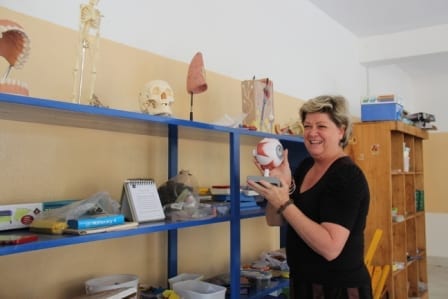
"The teachers are working with mentors to try to implement changes that we all believe could work better for the students' learning process," says George Stephen, Lower Primary Headmaster.
Lower Primary mentor Lynn McMahon is an early childhood specialist with 30 years experience teaching both children and adults in this field. One of her current projects is encouraging teachers of the youngest children to integrate the Tanzanian curriculum across different departments. “The idea is for lessons to be linked across all subject areas,” says Lynn. “This provides reinforcement of new ideas and deeper understanding of new topics, and enhances the development of their new language.”
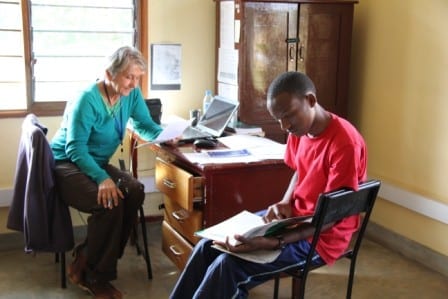
Over at Smith campus, which houses the secondary school, Linda Kitto spends some time researching local plants and discussing experiment ideas with the biology teachers. St Jude’s has a total of eight science labs for Physics, Biology, Chemistry, and multipurpose uses.
The teachers use the labs to make the curriculum come to life with practical experience of scientific concepts. Many students in Tanzania only get to do science from a book. Most don't even have access to science books.
“The mentors suggest experiments and show how to use them effectively to introduce a new topic,” says Humprey Nkya, Head of the Biology Department.
“We share ideas and experiences,” says Rasul Abdul, Head of the Secondary School. “We learn from each other how to make lessons even more engaging.”
St Jude’s mentors specialize in different areas. Glenyce Surtees is a library educator. She creates programs to help teachers and library staff to enhance their research skills and look deeper for different sources of information throughout the school’s more than 30 thousand books, DVDs and CDs (not including textbooks) in three libraries.
Sika Somberg acts as a career guidance mentor. She works closely with teacher Mshauri Calistus to create activities and counseling sessions. The two want to raise the students’ awareness about the broad range of professional paths they can pursue after high school graduation.
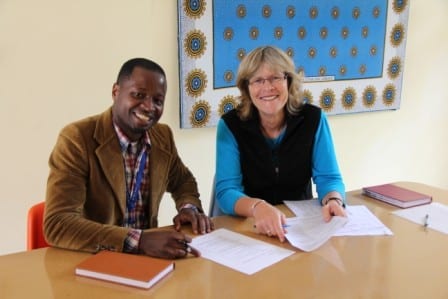
St Jude’s academic leaders are actively involved. Every week a group of Upper Primary school leaders sit around a table with Gaye Tiplady and discuss leadership methods and techniques to ensure St Jude’s meets its strategic goals. Gaye has over 25 years of experience in education, 11 of which as principal of a primary school in New Zealand.
On a recent Monday morning the topic was the school’s goal of being a center of excellence. The discussion focused on how to help underperforming students.
“I take strong responsibility for student performance,” said Peter Manjalla, Headmaster of Upper Primary. “Our job is to make sure every student passes.”
The leaders first identified a clear goal: for all underperforming students to improve their marks. Each one suggested a number of strategies, which were listed and then combined into four, ranging from the proper use of available resources to each child getting individual support and encouragement.
“Leaders have to make lots of difficult decisions, so we really appreciate Gaye’s advice and guidance,” says Peter.
“We support the teachers and leaders through guidance, coaching and responding to requests for assistance in a particular area,” says Gaye. “Our aim is to build capacity in the academic staff so it’s important that they feel empowered and comfortable with what is being suggested.”
The sky’s the limit for our students who are already mapping out their careers in science, aviation, engineering, medicine, teaching, journalism and other fields.
St Jude’s has equipped them with the confidence and skills to believe in themselves and plan for their futures. We have well-stocked libraries, state-of-the-art science laboratories, ICT labs, art and music facilities.
Throughout the year, we also invite a range of guests to come and talk to our students about their jobs and how to enter into various industries. We have had visits from female civil and electrical engineers, some who have worked at The Nelson Mandela Institute.
The guests explained to the students about the many facets of the job and the education needed to get into the field. The students asked many questions and a few stayed after the talk to get further information about the different branches of engineering. The students found the female engineers very inspiring and saw them as role models for their future ambitions.
Our secondary students also had a guest talk from freelance journalist Adam Bemma, from Canada, about pursuing careers in media. He spoke about his education and how he worked as a radio journalist in his home country. Adam explained the role of the media and the need for good journalists in the development of a country like Tanzania.
St Jude’s has many talented creative writers who are continually looking for an outlet to publish their work. Some students planned to meet with Adam at the local Mambo Jambo radio station, so they could continue to learn about journalism.
Students also learnt about the exciting world of aviation when local pilot Captain Philemon Kisamo gave a talk to the class. He talked about the different types of aircrafts and the courses available.
St Jude’s exposes its students to critical and creative thinkers so they can have many choices when they are deciding their future careers.
Four St Jude's secondary students and two teachers were given the opportunity to climb Mount Kilimanjaro in January, with our great supporter, Global Immersion. Amani, one of our Form 4 students, reached the top. Steph, our volunteer Media Officer, caught up with Amani and transcribed his reflections on the awesome feat.
"As a young boy, I never thought it possible that I would climb Kilimanjaro so I when I got the amazing opportunity to do so, I was very excited about it. Climbing Kili was tough and I thought, at times, I wouldn't make it. I am used to hiking, long distance running and athletics but going up the mountain was a new challenge for me."
"On the first day, I felt no pain or tiredness and loved walking through a forest and observing the different types of plants. We walked for about five and a half hours and I dreamt about reaching the top. The second day was a bit tougher as I really felt the cold and had to learn to climatise to the altitude but I didn't give up."
"The last night was the most challenging but it was a wonderful feeling to reach Kili. At night, from high above, I could see the bright lights of Arusha and Moshi far below. Slowly and eventually I reached the summit. It was so amazing to be on top of it and seeing the sun rise and looking over at Mount Meru which looked very small. The sun was very near to me, when I was on the peak and I felt on top of the world."
"I am from the Chagga tribe, which is from the slopes of Mount Kilimanjaro, so I was climbing my mountain. That is what the porters would remind me of, when I felt discouraged, about how I was climbing "my mountain" and I should feel proud. I did. I felt like a 'Chagga Hero' because I had summited the mountain which is so important to me and my tribe. I felt like a great hero. It has made me feel like I can scale any mountain and I now hope and plan to climb one in Kenya someday."
"I am thankful and really appreciate St Jude's and Global Immersion for giving me the chance to climb Kili which I didn't think I'd ever get to do."
Tanzania is a country with two parallels. It experiences growth in its gas reserves and the tourism sector but many of its people are marred by poverty. Added to that is a chronic shortage of skilled scientists and other professionals to advance the country forward.
The School of St Jude believes many of its young students have the potential to become the next generation of highly qualified scientists who will make breakthroughs in their fields. Tanzanian teachers nurture our students in the classroom so they learn a whole gamut of science subjects.
In earlier grades at St Jude’s, the students learn about nutritious food and its origins -- foods that will build, protect and energise them. They do activities like sorting through fruits, vegetables and grains to know their nutritional value.
These students come from impoverished backgrounds and do not always know which are good foods or understand what it means to have a balanced diet. Their confidence grows as they identify the different types of foods.
“It’s not a concept they know. At their home at the moment, they just eat what they get and not what is supposed to be eaten. So their meals are sometimes not complete or balanced,” says Ms. Ruth Kyata, Lower Primary Science Teacher at St Jude’s.
“However, they love learning about science at St Jude’s. They’re doing practical work. They’re going home to find out about different kinds of foods and then they come to school and ask you which kind of food does this belong to.”
At this early stage, they learn about healthy foods, body cleanliness and ways to look after themselves and keep their areas clean.
Our science teachers are supported by mentors and sometimes nuns in the classroom. The teacher mentors help staff to improve their English and show them new resources, while our nuns help students with activities.
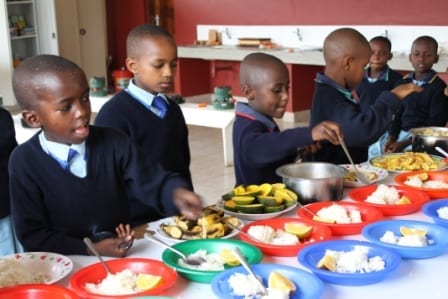
As the students enter Upper Primary they’re building on their knowledge by doing more hands on science experiments, exploring body systems, different forms of energy and plant life. Thanks to St Jude’s generous supporters, the students have access to state-of-the-art science equipment and laboratories to conduct experiments.
“They learn about germination. They have to plant the seeds themselves and see how they’re developing, do measurements and watch it grow,” says Ms. Ernesta Njau, Upper Primary Science Teacher at St Jude’s.
“I love doing experiments because it’s fun to do them and learn. One time we had to use different solutions to make an egg float in water,” says Asindh, 6D student.
It is at this stage that the students are considering the science subjects that they will take on during secondary school at St Jude’s.
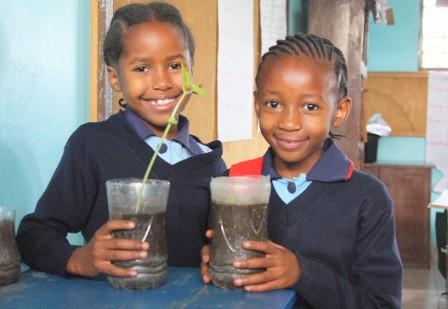
St Jude’s offers specialist academic streams including science and mathematics which are both highly popular with our secondary students at Smith Campus. With eight well-resourced science labs (four for A-level and four for O-LEVEL,) St Jude’s produces exceptionally high academic results in this area.
Fifty seven per cent of St Jude’s students are girls and a large number of them are studying science at St Jude’s Smith Campus. “The girls enjoy science and we’re encouraging them to pursue it as a career,” says Mr. Samwel Meing’atu, Secondary Science Teacher at St Jude’s. “We’re trying to eliminate that stigma which says science is only for men.”
The students can study a combination subjects like physics, chemistry and biology to help them reach their goals of going to university and becoming doctors, pharmacists, nurses or engineers. They do many more hands-on experiments and dissections of small mammals to better understand bodily systems.
“We need specially trained, good scientists because we have the emerging gas and nuclear sector and oil in Zanzibar,” says Mr. Meing’atu. “We’re preparing our students to have the confidence and skills to go to university and specialise in different careers. At the moment, they’re learning a little bit about medicine and studying the living organism. Through a variety of subjects, St Jude’s is stimulating the students’ minds.”
St Jude’s is preparing its students to be future leaders in their country, Africa and abroad. They have access to career counsellors and fairs to learn how they can break into their chosen industries.
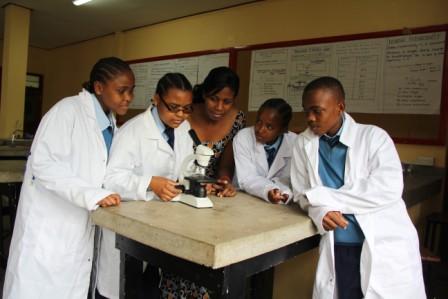
We are proud that our students are constantly challenging themselves. Each year the school holds a science fair so the students can show their creative and technological innovations. Some secondary students have recently taken their modified generator project, which runs on three fuels, to Dar es Salaam, to enter in the Tanzanian Young Scientists Competition.
You can support St Jude’s by sponsoring one of our motivated students and teachers. By sponsoring a student you will help provide pens, pencils, books, school uniforms and nourishing hot lunches. You’d also be helping our teachers who are equipped with the necessary resources to use in the classroom.
You can find out more about our sponsorship packages here.
If you have traveled around Tanzania recently, you probably have bananas on your mind.
They are the most ubiquitous food you can find here. Traveling by car, it is impossible not to notice the banana plantations lining the roads, or the women selling them in plastic containers or on pieces of cloth placed on the ground.
Tanzanians already cook green bananas in many of their dishes, whether the fruit by itself or as an ingredient in meat, beans and lentil stews.
What no one here knew is that you can add a lot more than the fruit to your recipes.
The cooks at St Jude’s learned that first hand from Anne Perera, a food and nutrition consultant from New Zealand who volunteered to give a two-day banana tree cooking course at the school.
“The blossom, green peel and the pith of the stem have a high nutritional value,” says dr. Perera.
As it turns out, green banana peels, blossoms and stems are important sources of fibers, potassium, and vitamins A, C and E.
The blossoms taste like artichokes. As with artichokes, both the fleshy part and the heart are edible. They contain saponins, phytochemicals thought to lower bad cholesterol and boost our immunity against infection. They are also an excellent source of flavonoids, which help prevent damage to DNA cells by neutralizing free radicals.
The green peel contains two important substances: tryptophan (increases serotonin levels, which balances mood and emotions) and lutein (a powerful antioxidant that protects the eye from a number of diseases and the harmful frequencies of UV radiation from the sun).
The banana stem is very beneficial for those on a weight-loss program. It is also a rich source of potassium and vitamin B6, which helps in the production of insulin and hemoglobin. Eating banana stems once a week keeps high blood pressure in control. They are diuretic and help detoxify the body.
Banana blossom
Wash it thoroughly and remove the colored outer petals one by one until the tender part is exposed.
Slice it thinly and place it in bowls with salt water.
Add cooking oil to the pot, heat it, and add chopped onions and garlic.
Squeeze the blossom slices to remove the salt water, place them in the pot and cook until tender.
Add salt and pilau masala to taste (Tanzanian seasoning made of cumin, cardamom, black pepper, cinnamon and cloves)
Add green sliced green peppers, tomatoes and amaranth leaves
Cook until well blended and in the end add coconut milk
Green Peel
Wash the green bananas and peel them.
Cut the peel into small pieces and place them in salt water.
In a bit of oil sautee chopped onions and garlic and add the cut peel.
Cook until tender
Add pilau masala and salt to taste, then quartered tomatoes and coconut milk.
Pith of the Stem
Remove the pith carefully,
Slice and remove the strands as much as possible, then place in salt water.
Cut the slices further into small dices.
Dice onions, garlic, carrots and green peppers, and place in a pan with heated oil.
Add diced sliced and diced pith, green pepper, tomatoes, and finally coconut milk.
A squeeze of lime for extra taste.
These dishes can be served with ugali, the traditional Tanzanian polenta.
By Gemma Sisia
In the international dialogue about girls’ access to school as a way to end poverty, I see an elephant in the room, namely the lack of quality in public education.
You can send every girl to school and even keep them there for a number of years, but if these institutions are not equipped to teach them well, they are unlikely to achieve a generational leap out of poverty. In Sub-Saharan Africa, with many developing countries now approaching universal primary education, the challenge is how to raise the educational standards.
Whenever people find out I have founded The School of St Jude, a nonprofit school offering a free high quality education to underprivileged students in Tanzania, a common question is, “What’s your policy on gender?”
My answer, to some people’s disappointment, is, “None.”
Don’t get me wrong. I think educating girls is extremely important in the fight against poverty. The World Bank has shown how the exclusion of girls from school leads to a less qualified workforce, inefficient allocation of labor and lost productivity. According to the UNFPA, educated girls tend to marry later, have fewer children, and seek health care for themselves and their children. Organizations such as Tostan show how education programs help girls and women know their rights and fight for them.
At The School of St Jude, girls already make up 57 percent of the student body, and we didn’t need to resort to quotas to achieve that. Besides a genuine financial need, our only selection criterion is academic talent. We have more girls because, in the earliest primary school grades, when we recruit most of our new students, girls develop faster than boys.
But recruitment doesn’t solve all problems. In many public schools in Tanzania, girls have to overcome a number of obstacles in order to maintain a regular attendance.
Unisex toilets, for instance, often without doors, are common. That causes teenagers a lot of embarrassment. Equally vexing is the lack of school buses. The BBC has documented the story of a Tanzanian girl who must walk 7km to school and another 7km to get back home on a daily basis.
The trek to and from school can be a dangerous enterprise. Stories of uniformed teenage girls being abducted and raped are not uncommon. Tanzanian law determines that a girl must be permanently blocked from attending school if she gets pregnant, as reported by the Center for Reproductive Rights.
The School of St Jude has eliminated a number of these obstacles. We offer our students reliable school buses, hot meals, boarding rooms, plenty of separate bathroom facilities, and a health and welfare team to support those in need of special attention.
As our girl/boy ratio attests, if you level the playing field, girls will come and stay.
None of that, however, is enough to help girls produce the generational leap out of poverty we expect of them. If we want to give them a minimum chance of making more money and having a more comfortable life than their parents had, we need to provide them with a quality education.
I believe injecting quality in education systems, especially in Sub-Saharan Africa, is one of the world’s largest challenges today in the fight against poverty.
Tanzania, like other nations, has made big strides towards achieving universal primary education, in order to meet the Millenium Development Goal’s 2015 deadline. But like the majority of countries struggling to improve their public education systems, quantity has not yet been accompanied by quality.
Here, government schools have as many as 200 children per classroom, and no learning resources other than a blackboard and a few shared textbooks. Besides, corporal punishment is used as a disciplining tool. According to UNICEF, “over 50 percent of girls and boys interviewed reported being punched, kicked or whipped by a teacher.”
In contrast, The School of St. Jude offers 1 teacher to a maximum of 30 students, mentors to help with the teachers’ professional development, computer and art rooms, sports fields, well-stacked libraries, science labs, and free textbooks and school materials. Corporal punishment is absolutely prohibited.
We have recently conducted an informal career preference survey with 100 of our 600 secondary students aged 14 to 19 years old.
Among those who took part in the survey, 42 percent of girls and 31 percent of boys want to either start a business or work in business administration; 22 percent of girls and 11 percent of boys want to become doctors; and 27 percent of boys and 11 percent of girls would like to become engineers.
That makes me go back to the beginning and contradict myself: I do have a gender policy. My policy is dual: level the playing field and provide both girls and boys with a quality education.