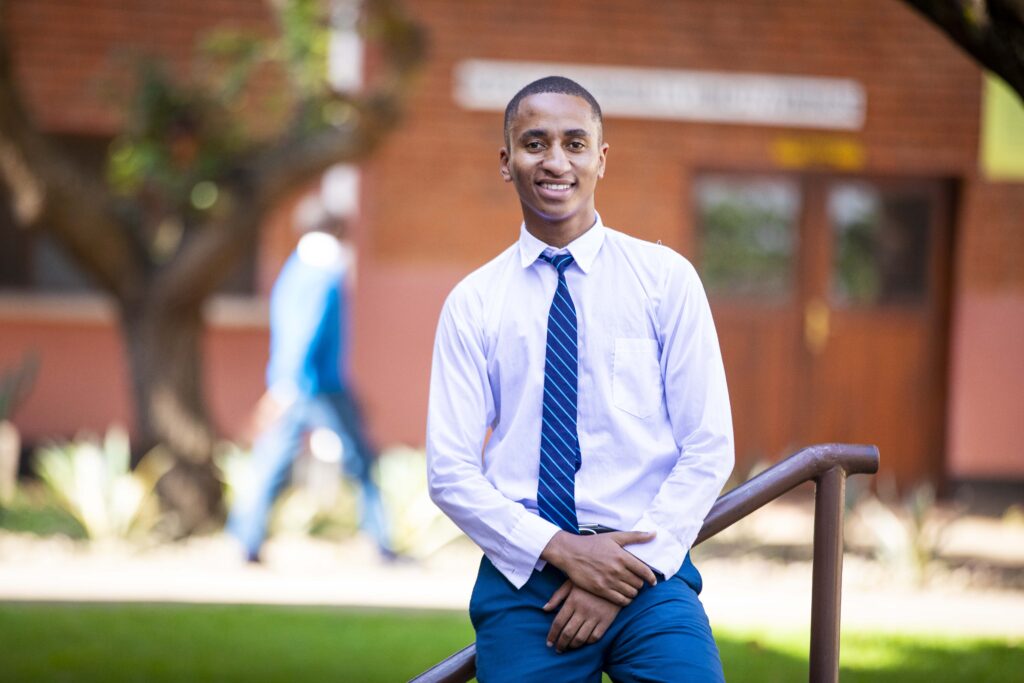
For Rogers, Class of 2024, the inspiration to make a difference came shortly after finishing high school. As he spent time with younger siblings, friends and students in local government schools, he noticed a challenge many young people silently face. Students were struggling with examinations, uncertain about career paths and lacking confidence when speaking in front of others. It was not because they lacked intelligence or potential. What they lacked was guidance, exposure, and encouragement.
Rogers is currently pursuing a Bachelor of Governance and Development at MS TCDC but joined forces with fellow St Jude’s alum James in 2024 to establish an NGO called We All Can Africa. Although James is currently in Mauritius pursuing a Bachelor of Science in Entrepreneurial Leadership, the two continue working together toward one shared vision to create a future where every student, regardless of background, has access to the skills, confidence and support needed to succeed both academically and personally.
“What pushed me most was seeing students who are capable but lack guidance and confidence,” Rogers explains. “Sometimes a student just needs someone to explain things differently and remind them that they are capable of succeeding.”
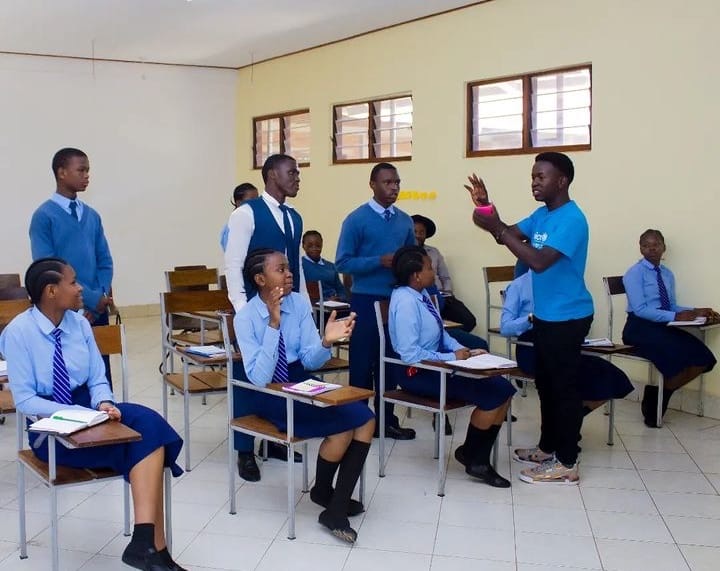
Through We All Can Africa, the team visits local government schools to conduct interactive sessions on public speaking, gender awareness, career guidance and exam preparation. Their mission goes beyond delivering motivational talks for a single afternoon. They want students to walk away feeling seen, informed, empowered and more confident about their future.
So far, the organisation has reached more than 200 students from three different local government schools around Arusha. For many students, it was the first time having open conversations about careers, confidence and practical study and exam techniques that can significantly improve performance.
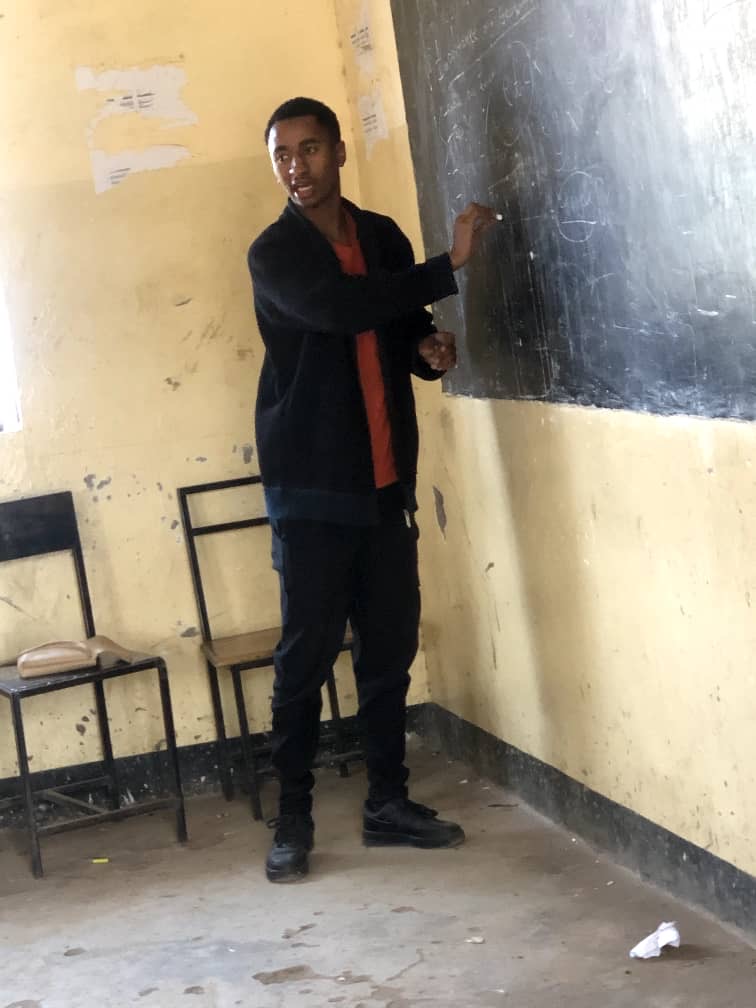
What makes their initiative especially impactful is how authentic and relatable it is. They understand the realities these students face because they have witnessed them closely in their own communities.
Rogers credits much of their inspiration and confidence to the environment they experienced at The School of St Jude.
“St Jude’s gave us exposure and taught us how to approach challenges with confidence,” Rogers says. “The support we received made us realise that we can also return and help others in a meaningful way.”
There is something deeply inspiring about young alumni who choose to return to their communities and build solutions instead of simply talking about the problems. Rogers and James could have focused solely on their personal journeys after graduation, but instead, they chose impact. They chose service. They chose to create opportunities for others.
Although their work is still growing, their vision is already clear. In early June, Rogers and the We All Can Africa team plan to host another session at a local secondary school, continuing their mission of reaching more students and opening more doors through awareness, guidance and encouragement.
When Dastan first arrived at The School of St Jude, no one could have predicted that a shy ten-year-old would one day captivate an entire school. But in 2014, while in Standard 3, his class teacher, Mr Samson, asked him to deliver a speech titled “Am I Speaking?” at a school assembly. Dastan spoke passionately about how young Africans could draw inspiration from the patriotism of Tanzania’s founding leaders like Mwalimu Julius Nyerere and Kwame Nkrumah to drive economic progress in their communities.
He concluded with a line that resonated his beliefs. “We are children of Africa, let us fight poverty through education, century to century, generation to generation.”
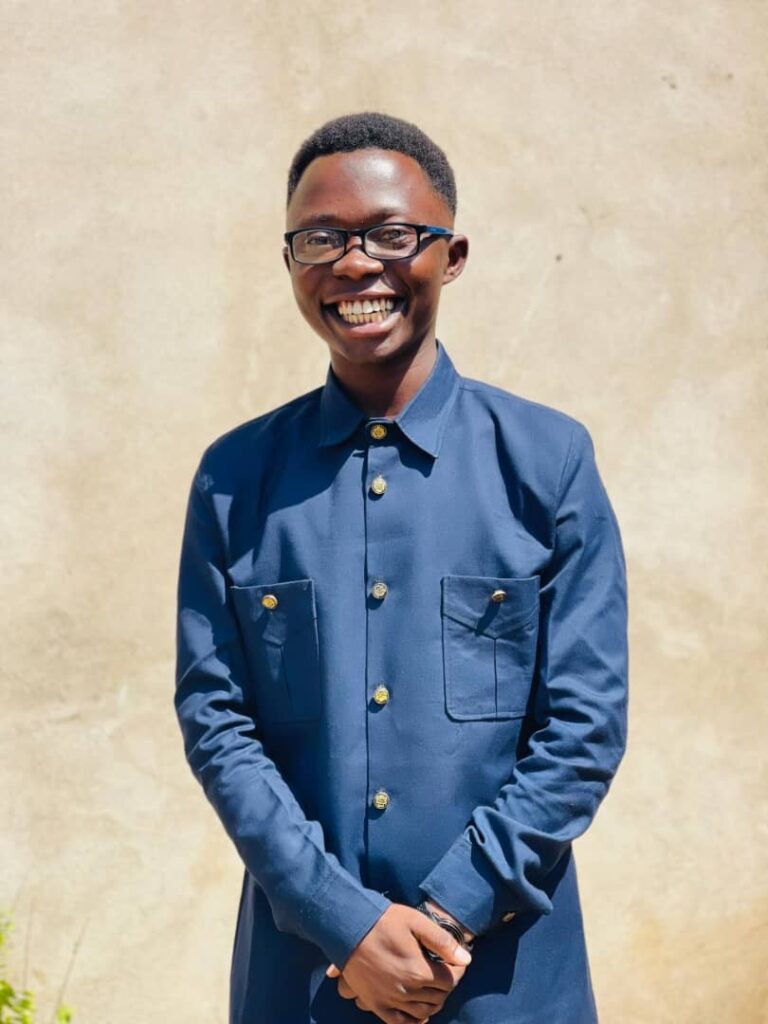
He delivered the speech with such confidence that his classmates immediately gave him a nickname “Mr President.” While it was playful, it also captured something real. St Jude’s had unlocked a voice that was impossible to ignore.
Over the years, St Jude’s continued to give him countless opportunities to nurture this talent. Whether he was speaking at assemblies, joining debates or representing St Jude’s in competitions, Dastan steadily grew into a thoughtful and bold communicator. Those experiences taught him discipline, courage and the belief that his voice could make a difference; lessons he still carries today.

By the time he finished Form 4, he felt a strong pull toward journalism and storytelling, fields that allowed him to influence conversations around Tanzania’s growth. He went on to study media at Habari Maalum College, where, in his very first year, he was elected Vice President of the student government. One year later, he won the presidential election by a landslide 75% of the vote, officially becoming the 25th Student President.
Today, Dastan continues to use media as a platform for activism through his latest projects MAPEMWA (Mawazo Pevu Mwangani) Journal and Kipaza cha Siasa, a political documentary series. His work has aired on several Tanzanian radio stations, as he explores African politics, human rights, and governance while promoting civic awareness.
When asked how he found the confidence to pursue leadership so boldly, he points back to St Jude’s. “St Jude’s didn’t just educate me. It shaped my character, values, and purpose,” he says.
From a young boy standing nervously on a school stage to a university student body president and rising media voice, Dastan’s journey reflects what’s possible when a child is given opportunity, encouragement and the belief that their future can be extraordinary.
Emmanuel, Form 4 graduate from the Class of 2020, is no stranger to innovation. The last time we caught up with him, he had developed his own automatic handwashing system to tackle hygiene challenges during the COVID-19 pandemic. Today, he’s taken his vision even further, turning local solutions into projects that impact communities across Africa.
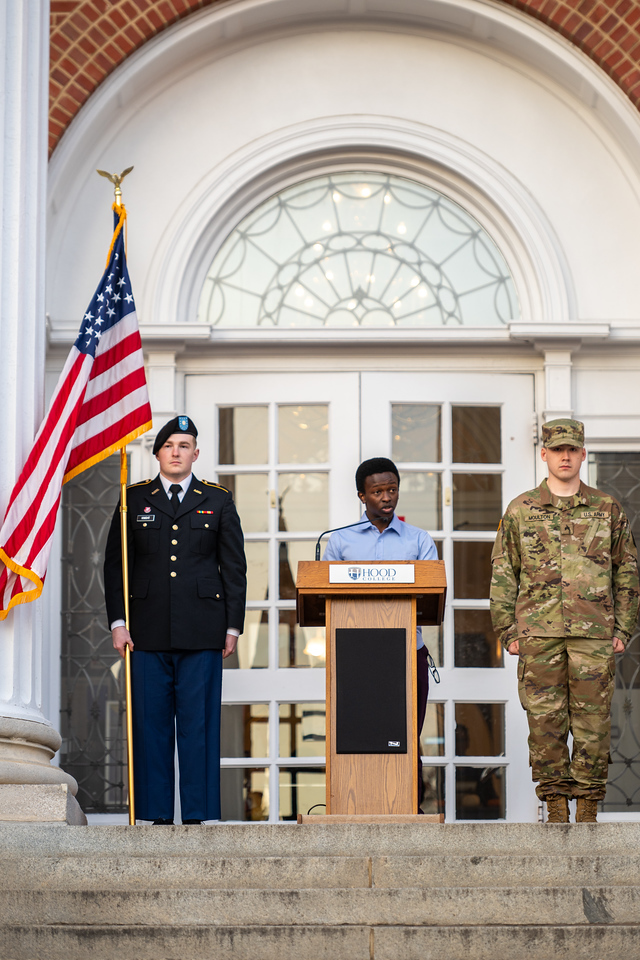
On the international stage: Emmanuel received the Davis Peace Prize in early 2024, an award that helped him establish the peace Library in Zanzibar.
During the COVID-19 pandemic, at just 18 years old, he saw the urgent need for clean water and proper hygiene to protect his community's health. Driven by his passion for children’s rights and a safe environment, he created a foot-operated handwashing machine to reduce hand contact and limit germ transmission.
His invention led to the installation of over 400 handwashing machines across northern Tanzania, significantly promoting better hygiene and helping to reduce the spread of the virus. This innovative effort quickly caught UNICEF’s attention, leading to his appointment as a youth ambassador, expanding his mission of improving health access and awareness.
Soon after, he was named one of 9 Young African Activists to Look Out for in 2022 by Global Citizen, furthering his advocacy horizon.
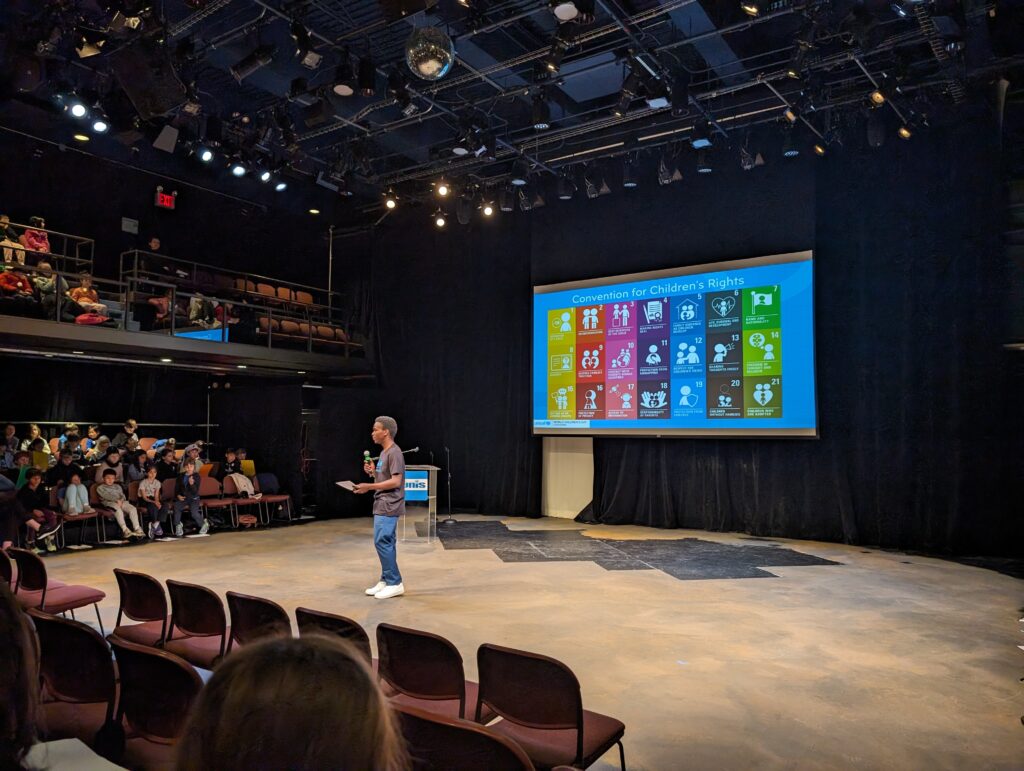
“It was an incredible honour that motivated me to keep pushing for change. This recognition opened doors for partnerships and collaborations, allowing him to scale his impact and inspire more youth to take action,” he says.
With the success of his handwashing machine, he went on to establish a community library under his peace project. The Peace Library in Kizimkazi, Zanzibar was established by Emmanuel, thanks to the Davis Peace Prize that he won in early 2024, and support from the Assalam Foundation.
“The idea for the library was fuelled by my conviction that peace education begins with accessible knowledge. I envisioned a vibrant space where students could explore peace, leadership, and advocacy, equipping them to become peace ambassadors in their communities and fostering long-term social change,” he says.
Emmanuel describes it as more than just a library; it’s a thriving space where children can learn, connect with their cultural roots, and build community. With a theatre hall that accommodates over 400 people, the library hosts gatherings, events, and features screens displaying educational resources, opening doors to knowledge and connections beyond Zanzibar.
His mission? “I want to inspire African youth to create change,” he says.
Through workshops and public speaking, he reaches young people across the continent, rallying them to advocate for climate, education, and peace. His journey is a call to St Jude’s alumni, showing the impact they can have in leading Africa forward.
Growing up in Tanzania’s busy cities, Benson was surrounded by the roar of motorbikes and endless car horns. But beneath the everyday chaos, he saw something many missed; a pattern of problems such as youth unemployment, urban congestion, and rising pollution fuelled by an outdated way of moving people and packages.
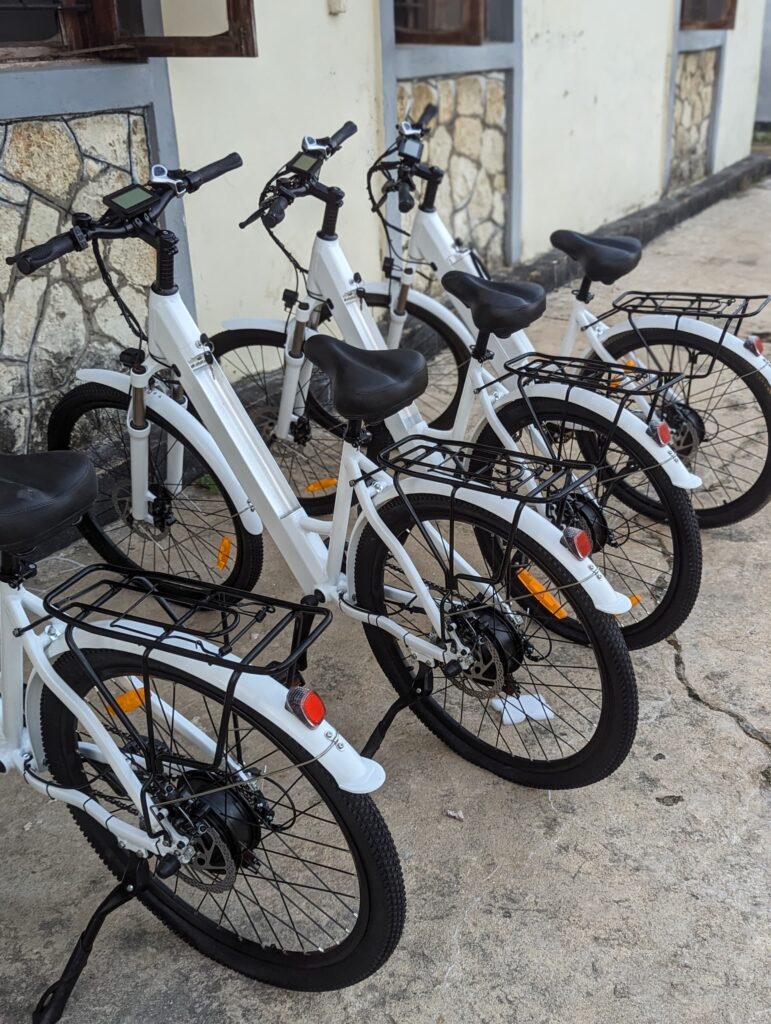
With a childhood friend and a shared vision for a greener future, Benson co-founded FikaChu, a smart, electric bicycle delivery platform designed to tackle three major urban challenges with one bold idea. They source components from original equipment manufacturers (OEMs) in Asia, then assemble the bicycles and integrate them with their mobile app in Tanzania.
"We kept asking ourselves, what if the mobility solution could also create jobs and clean the air? That’s how FikaChu was born,” says Benson.
The concept is simple, but the impact is profound. Benson envisions that FikaChu connects small and medium-sized businesses with customers in Dar es Salaam, through a fleet of gig workers using electric bikes. No personal vehicle is required, just scan, ride, deliver, and return. The result? A remarkable 94% reduction in emissions compared to traditional motorbike deliveries.
“A typical internal combustion engine (ICE) motorcycle emits about 100g of CO2 per kilometre, while our electric bikes emit only 6g, that’s just 6%,” says Benson.
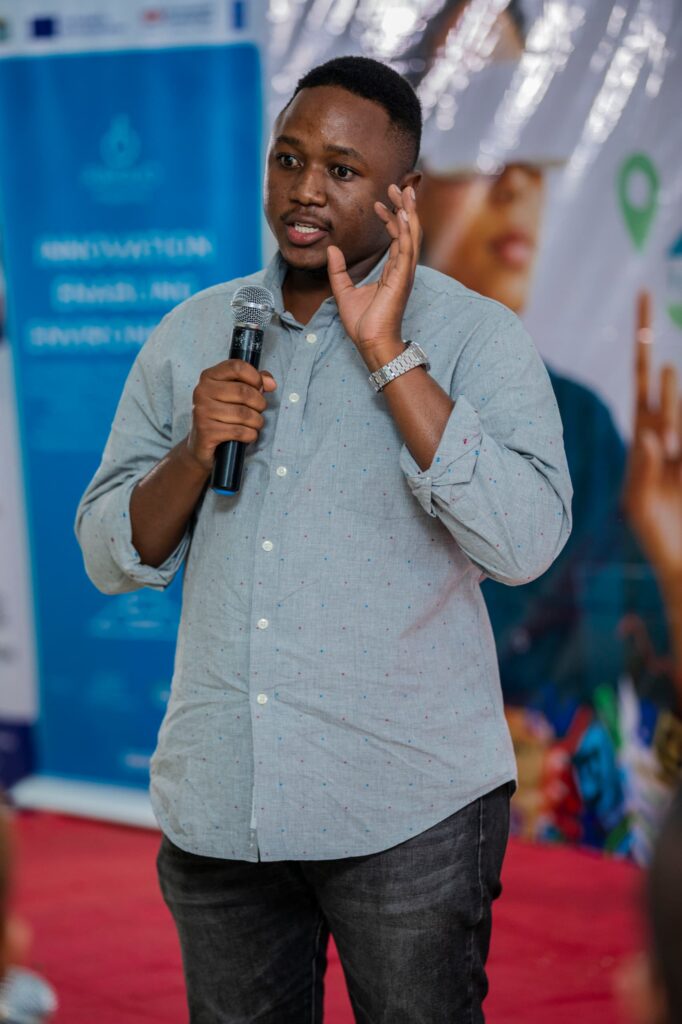
Earlier this year, Benson took FikaChu to the national stage at Innovation Week hosted by the Institute of Accountancy Arusha. It was his first time pitching in front of a large crowd, and he had just two minutes to make a lasting impression.
“The hardest part wasn’t the nerves. It was condensing everything our why, our how our vision into something unforgettable,” he says.
He did just that. Out of more than 30 innovators, Benson took home the first runner-up award validating that FikaChu was more than a clever idea. It was a movement in motion. Today, FikaChu is in its pilot phase, weaving through the streets of Tanzania as the team tests, adapts, and dreams bigger. They’re refining logistics, listening to feedback, and laying the groundwork for scale, all while keeping people and planet at the core of every decision.
“We’re not just building a company; we’re building a community. And we’re wide open to
partnerships, support, and collaboration,” he adds.
For Benson, innovation doesn’t begin in a lab or a corner office; it begins with courage. The courage to look at a daily problem and ask, what if?
“To any young person with an idea; start. Don’t wait for the perfect moment. Fail forward if you must, but move,” he adds.
When asked about how he competes with traditional motorbikes (bodaboda) he explained their approach.
“Before accepting a delivery task, we provide the rider or customer with a trip comparison analysis. This includes the estimated time it would take using a FikaChu e-bike versus a bodaboda, the amount of fuel a motorbike would consume, and the total cost savings they would get by choosing our service. We also show how much CO2 emissions they can avoid by going electric. It’s not just about speed, it’s about making an informed, ecofriendly, and cost-effective choice,” he says
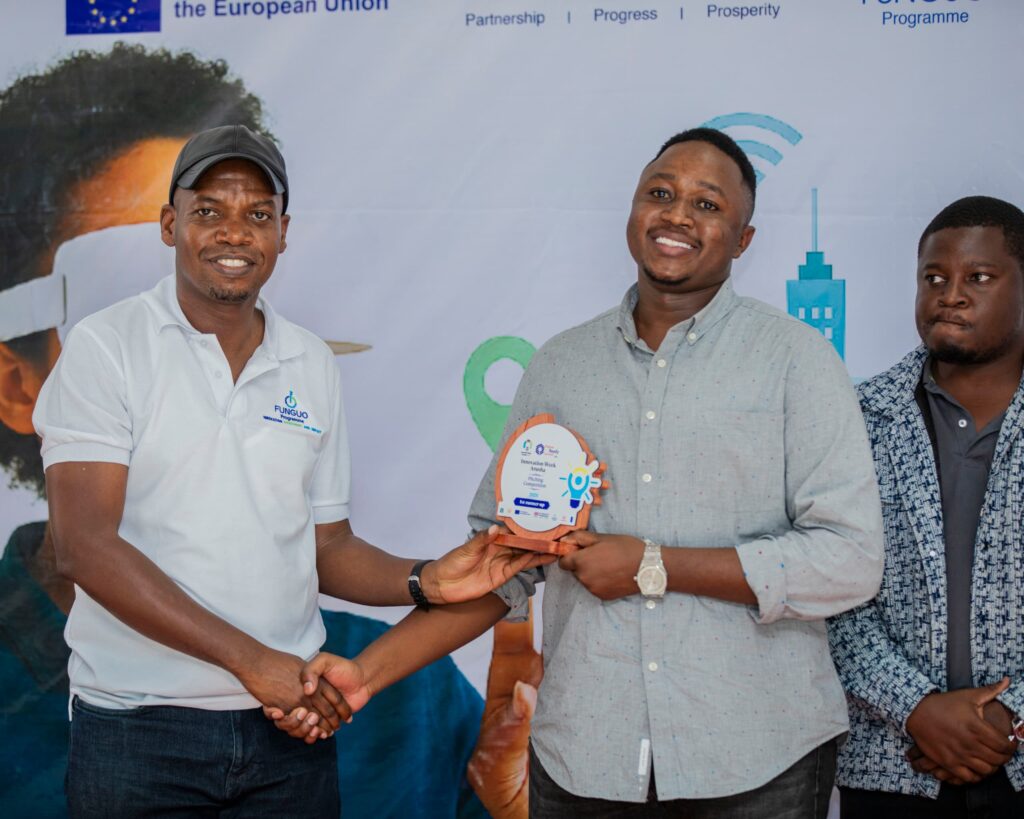
Through FikaChu, Benson isn’t just delivering goods; he’s delivering hope, a cleaner future, one ride at a time. With a growing fleet of five electric bikes, each capable of covering up to 50 kilometres on a single charge, he’s proving that small steps can drive big change. So far, FikaChu has successfully completed over 1,300 deliveries, and in the process, opened a new doorway to employment for young Tanzanians eager to earn, learn, and contribute to a greener economy.
We are immensely proud of our alumni like Benson, whose journey began with a dream to learn and make a difference. He has transformed challenges into opportunities for youth, communities, and the environment.
When Angel first walked through the gates of The School of St Jude, she was a bright student with big dreams but few resources. Thanks to the generosity of donors and sponsors, she gained not just a quality education but the confidence and tools to lead change.
Her journey began in 2017, when she and her friend Sharon shared a love for science and innovation. Their first major creation, a simple yet life-changing electric stick for the visually impaired, took them to the Project Inspire boot camp in Dodoma. That experience sparked a lifelong commitment to using innovation for good.
A year later, their banana peel fertiliser project took them to Science Week at the Nelson Mandela Institute of Science and Technology, where future African scientists, engineers and leaders learn to solve local challenges and drive progress across the region. By the time they reached A Level, Angel and Sharon were leading environmental initiatives on campus, from maintaining green spaces to inspiring fellow students to think sustainably.
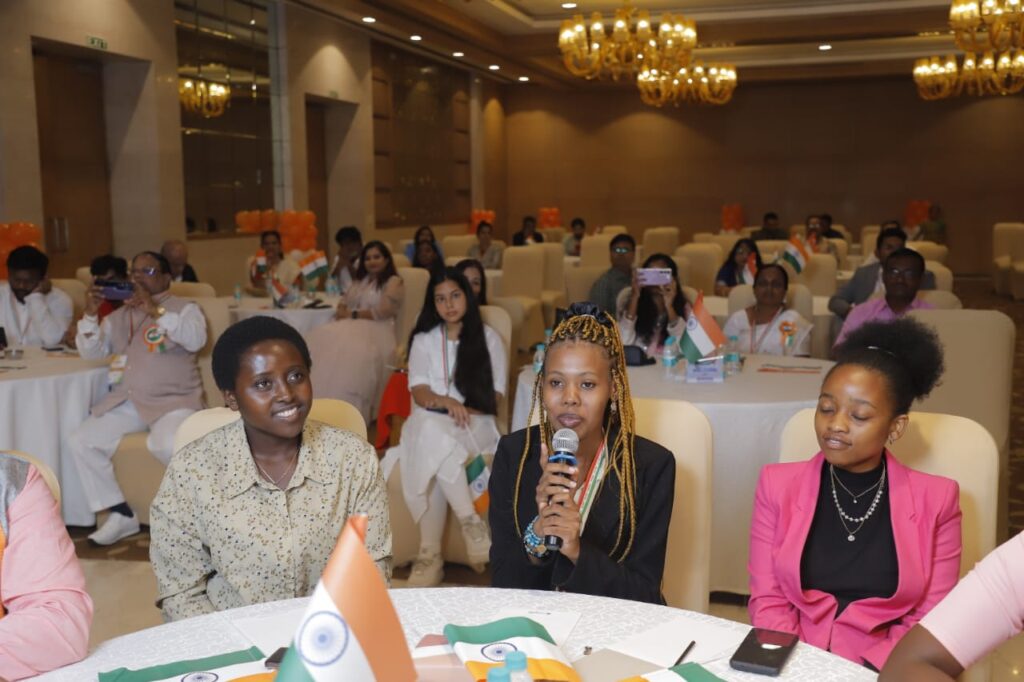
Out of this passion, Angel founded E.C.H.O. Elevating Climate Harmony Ontime, a youth-led non-governmental organisation (NGO) focused on tackling climate change. In 2024, E.C.H.O. made history by winning the prestigious Humanitarian Excellence Award from the I CAN Foundation, triumphing over entries from all 28 Indian states and more than 80 competitors worldwide.
The award recognized E.C.H.O.’s tangible impact on:
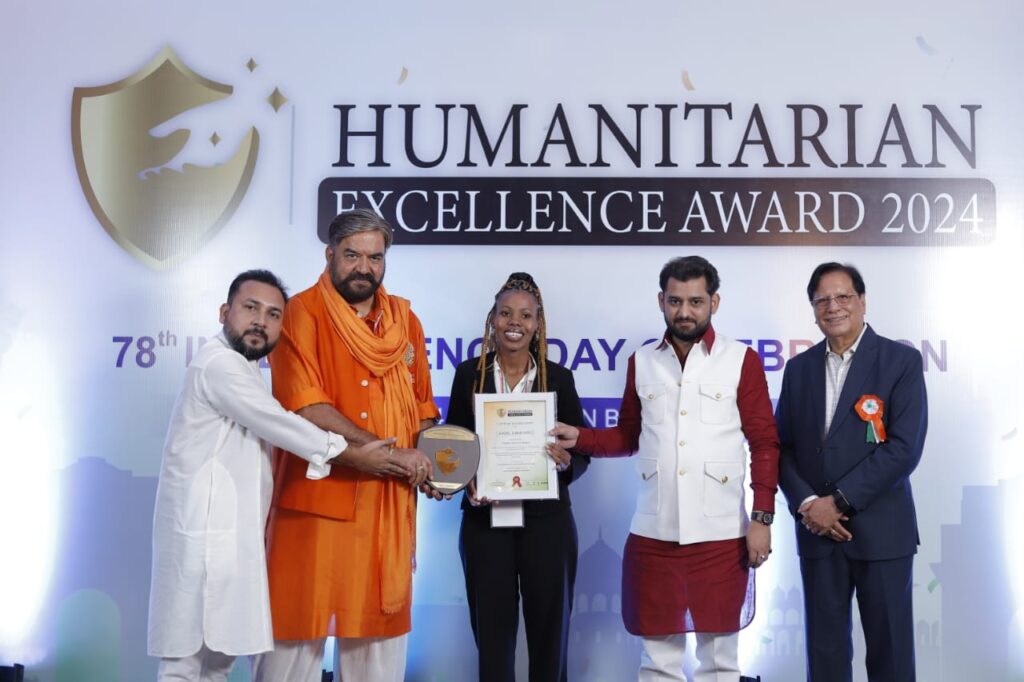
Now back in Tanzania after completing her studies in India, Angel is determined to bring her expertise home and is designing solar-powered cooling systems for farmers, developing sustainable irrigation, and building climate resilience in vulnerable communities.
Angel’s story is your story too. Without your generosity, this young leader might never have had the chance to dream this big, let alone inspire change on a global stage. Your support is not just educating students. It is equipping them to tackle some of the world’s most pressing challenges.
Johnson, Class of 2022, is on a mission to universally help students manage the daily pressures of school and build stronger mental resilience with his newly published book, 7 Mental Health Tips for Students: Become a Successful and Happier Student.
Johnson’s inspiration for the book came from his own experiences as a student.
“When I was in school, I loved spending time in the library, reading and talking to teachers,” he recalls.
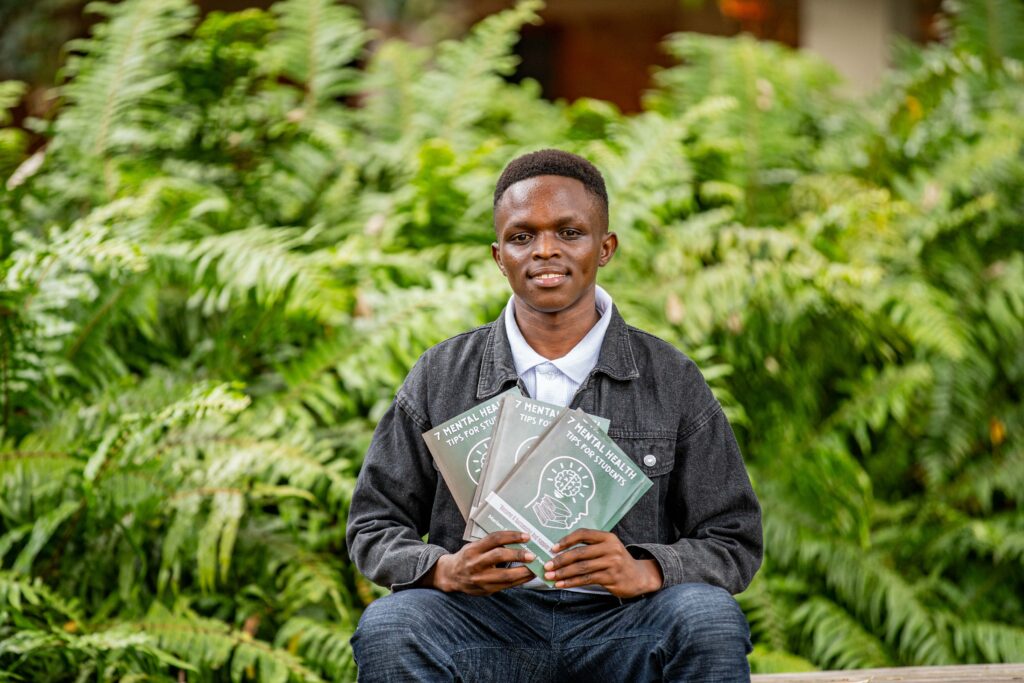
In 2023, Johnson completed his Community Service Year (CSY), a program where St Jude’s graduates spend a year volunteering in government schools, academic teams or head office at St Jude’s.
While teaching at a government school, he spoke with many students and conducted research to better understand how they coped with stress and balanced their wellbeing alongside academic demands.
Through this process, he noticed a broader gap in available resources. While many books focused on personal development, few addressed the real mental health challenges students faced when pursuing academics.
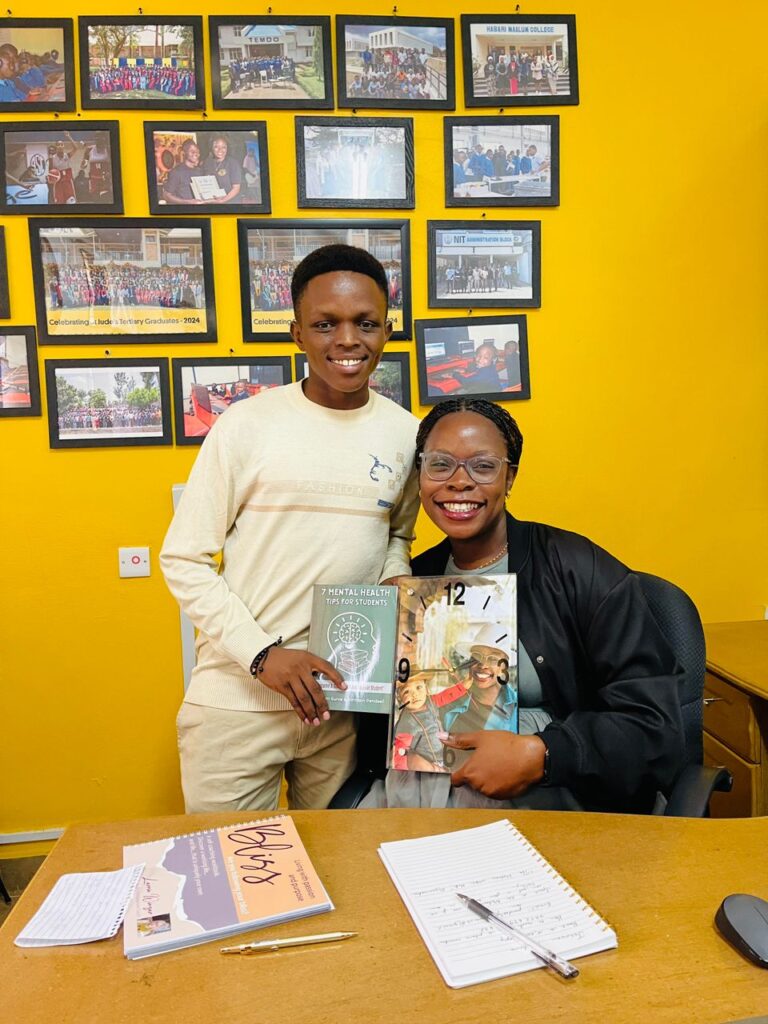
“When I was at the government school, I asked all types of students about the daily challenges they faced with stress. I saw there weren’t many books for just students on this,” says Johnson.
Motivated to do more, Johnson continued exploring the topic after starting his studies in Business Administration at Ashesi University in Ghana, where he recently completed his second year. It was during this time that he connected with Mariam, a clinical psychologist.
“Mariam was the guest speaker on a webinar about student wellbeing that I was part of. Afterwards, I reached out to her and we connected. She is leading the Wellness Within Hub, which provides workshops and resources for students,” he says.
Mariam was eager to support Johnson in bringing this idea to life, and together, they co-wrote the book over the span of a year. They intentionally kept it short and easy to navigate, recognising that many students are discouraged by lengthy books.
“Before we started writing, I also did lots of research, read books and spoke to lecturers and peers from different countries. But working with Mariam was great because she is very open to feedback and willing to change ideas. She also brought so much experience and credibility. I learnt a lot from her.”
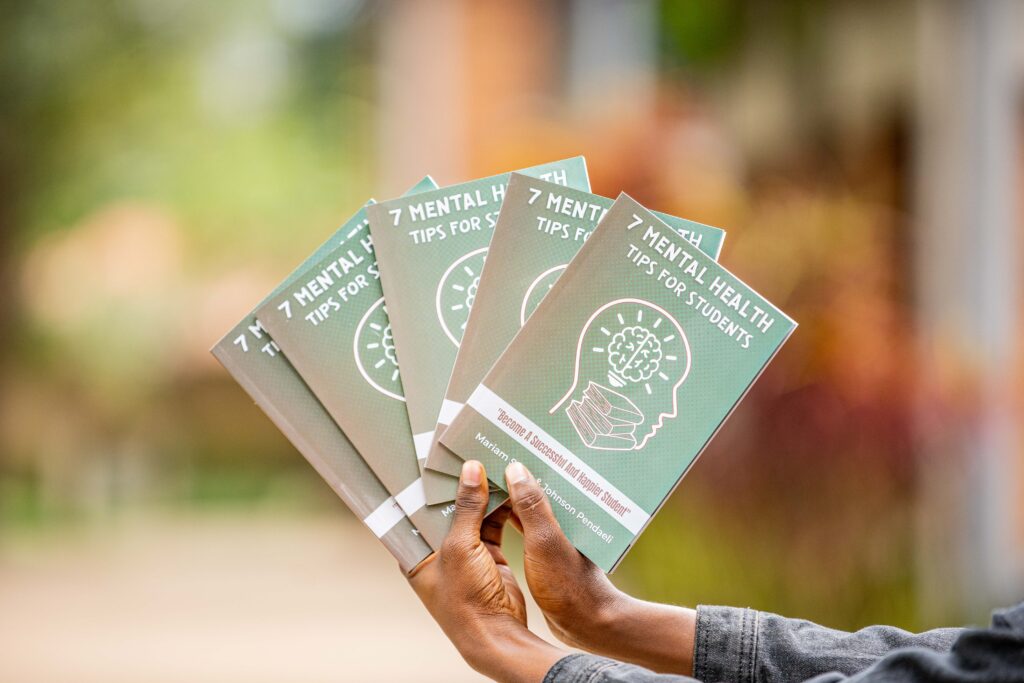
When asked about his favourite tip in the book, Johnson refers to what is known as ‘The Four A’s of Managing Stress: avoid, adapt, accept and alter.’
“This approach is useful for everyone, not just students. There’s no way to be completely free of stress, but you can become more resilient in how you manage it. We also wanted to make the book as short as possible for students to be able to skim through it so they can get the exact content relevant to them,” he adds.
When the hard copy was released, Johnson arranged for fellow St Jude’s alumni, who were beginning university in Ghana, to bring 500 printed copies of the book with them from Tanzania.
“It feels like a real achievement to see this book come to life. Some of my lecturers bought the book, and it’s available through the counselling department and wellness committee at Ashesi as a resource for students,” he adds.
Inspired by this experience, Johnson plans to write more books in the future, noting that this is just the beginning.
“I never thought when I was sitting in the library as a student that I would become an author one day. It was a challenge managing my university curriculum while writing the book. I wrote a lot on weekends. I also wrote in the early mornings and sometimes late at night,” he says.
Just this month, he returned to the very government school where the inspiration for his book first took root, invited by the headmaster to speak with students about mental health.
“This summer, I have also applied for some grants so I can help more students get this book, especially in rural areas like the one I taught at. I want this to be a resource for more students,” adds Johnson.
For now, copies are eagerly circulating among St Jude’s staff and university communities, with hopes to broaden its reach in the near future.