Six years ago, Eva’s face beamed from the cover of our school founder Gemma Sisia’s autobiography, titled ‘St Jude’s.’ Eva was a young girl who was still realising her dreams. She epitomised the happy, bright-eyed child at St Jude’s who is overjoyed about getting a free, high quality education. Now she has grown and is developing into a well-adjusted, young adult. She is in Form 1 and has big aspirations, with a world of possibilities in front of her. This is her story.
Eva started at St Jude’s in 2006, when the school was four years old and we had just over 600 students and around 115 staff.
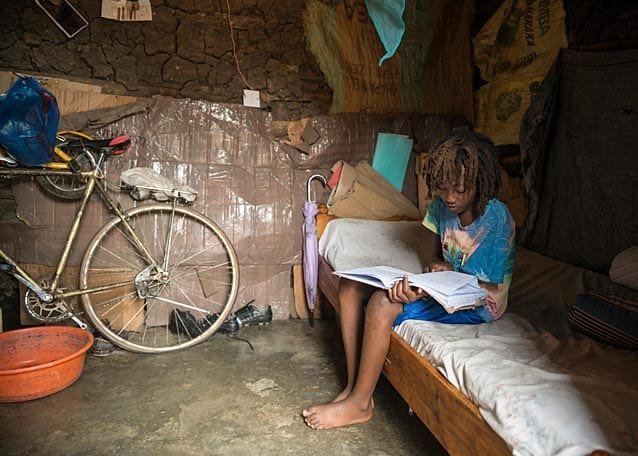
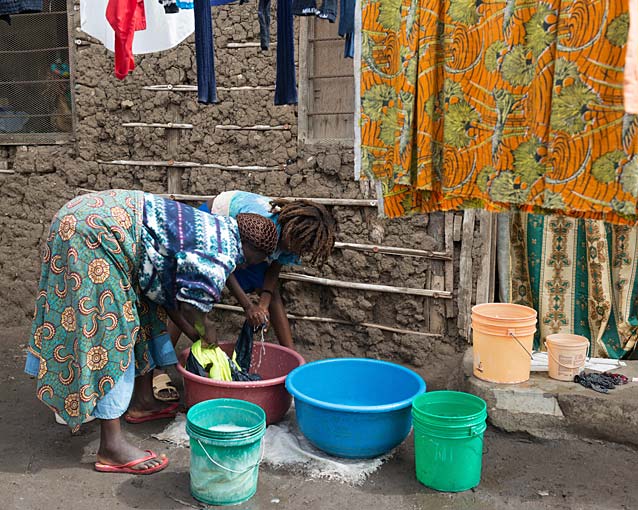
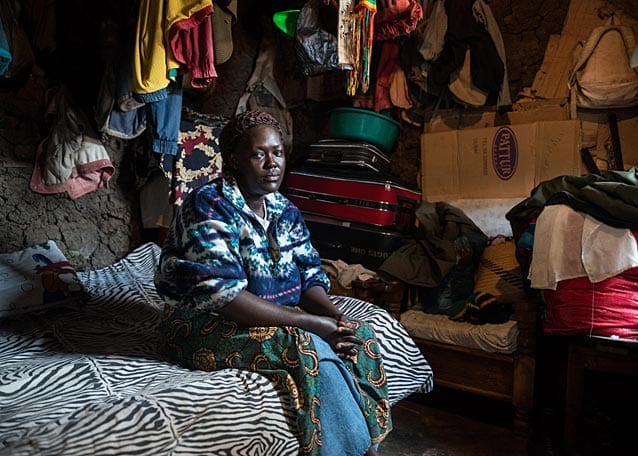
Eva’s family includes her father, John, mother, Penina, and younger brothers Richard and Benjamin. They live in a two-room brick home. Like many other Tanzanian dwellings, it has no plumbing (water is collected from a neighbourhood tap for a small monthly fee) and meals are prepared over a charcoal- or kerosene-fuelled stove.
To support the family, Eva’s father finds work where he can as a carpenter and a mason. Her mother works at their home as a tailor. They are big supporters of Eva’s education and encourage her to continue learning in the hope that one day she will have qualifications and a successful career so she can break the cycle of poverty for herself, help them and her community.
Eva showed promise as a student at a young age. As a child, she would often ask her parents to send her to a school which would enable her to learn English. “I wanted to learn English because I knew in this world of today that I needed it and I strived to get a high quality education as I wanted to have a bright future,” said Eva.
She grew up playing with her younger brother and their games would regularly revolve around learning. “There was one game where we liked to draw and the first one to finish was the winner. The aim of it was that you drew things, like an egg and you also wrote the name of it in English. So, I always liked to play games where I could learn new words.”
Before St Jude’s, Eva attended a government school where nearly all of her subjects were in Swahili. It was a limited learning environment where she felt she was not able to reach her full potential. She remembers hearing about St Jude’s at her old school and then soon applied.
It was a turning point in her life. After passing the relevant checks, she was accepted and began a new chapter of her life. “When I found out I was going to St Jude’s, I thought it was amazing and I was very happy. It meant a lot to me,” said Eva.
Since then she has reached a number of milestones. She successfully completed her seven years of primary schooling, has begun high school and has impressively scored A’s in almost all of her subjects. She also boards at the school’s Smith campus which is preparing her to be a strong, independent individual.
Eva’s life has been transformed because of her education. She has sponsors in Australia and is acutely aware that their support has enabled her to have clean uniforms, a place to board, fresh, nutritional food, committed teachers and access to state-of-the-art ICT laboratories and well-stocked libraries.
Research supports the assertion that sponsorship can make a huge difference in a child’s life. Bruce Wydick, an economist from the University of San Francisco, carried out a study in six countries over three continents, including in Uganda and Kenya. He and his team studied more than 10-thousand individuals who had been sponsored in the 1980s. The overall result was that student sponsorship works and that 50 to 80 per cent are more likely to complete a university education.
“By sponsoring a child at St Jude’s you will change the life of that child, their family, their community and contribute to changing their country,” says St Jude’s School Director, John Ford. “The evidence and the economics say it works and if you visit the school you can see it for yourself. What better way is there of using your money?”
Eva, the little girl that shyly took her first steps through the St Jude’s gates seven years ago, has grown into a happy, confident young adult. She is like any other teenager who enjoys spending time with her friends and playing card games. In a few years, Eva plans to head to university to study engineering and work in Tanzania. Like the young girl on the cover of St Jude’s, she is optimistic, loves life, has the world at her feet and is ready to embrace it.
As our first class of secondary students gets ready to graduate in 2015, we took an important step to help them plan their professional lives beyond the school grounds: we organized St Jude's Careers Fair.
Close to 700 secondary students had the opportunity to move around different tables and talk to 36 people about their professions in medicine, law, architecture, engineering, business, aviation, government, banking and journalism, among others.
They also collected information and spoke individually and in groups with representatives of 10 colleges and universities from the Arusha Region.
“This event helped me change my mind about my career choice,” said Penueli, a 17-year old student.
“I was thinking of becoming a copy editor for companies, but now I know I want to go into TV journalism.”
Students and staff from other schools in the region also participated in the event and were able to broaden their knowledge of career possibilities.
At the opening, students sang, presented short skits and gave talks related to their career choices. A number of local speakers encouraged students to apply themselves to their studies in order to build a solid career.
Jon Ford, St Jude’s new School Director, closed the event by telling the story of a student in the school he managed for 10 years in West Sussex, England. The student dreamed of becoming a doctor and studied really hard until she was accepted into medical school. The next time he saw her she was a well regarded doctor.
“You too can become doctors, or any other profession you desire,” he told the assembled students. “Just follow your dream and reach for the skies.”
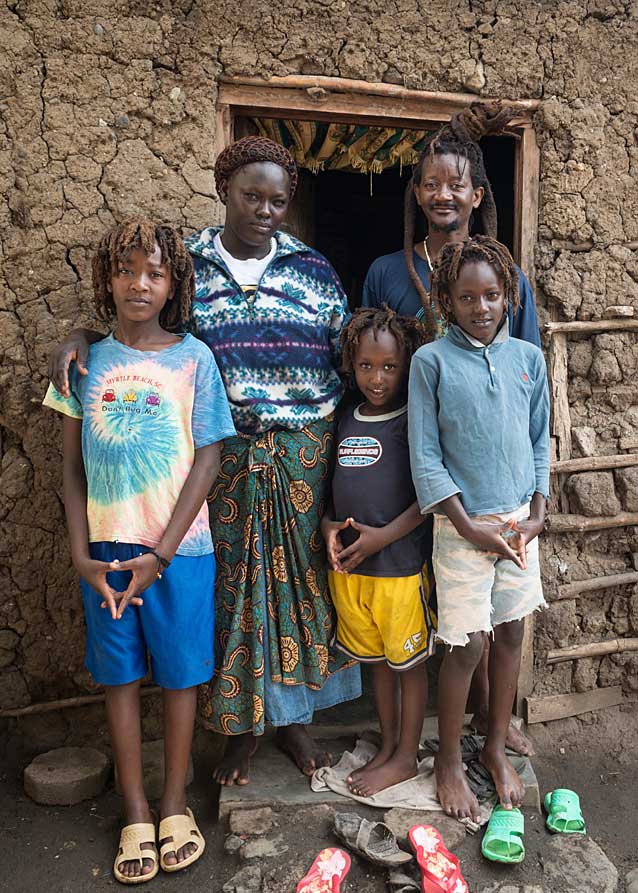
Culture is the total way of life that people in the society are blessed with. Culture is the characteristics of a particular group of people, defined by everything from language, religion, cuisine, social habits, music and arts. Through culture we are governed by norms and customs, which are the pillars of any society. If these pillars are not properly followed in our society, our culture will resemble a perfume with no smell. It’s a gradual existence of presenting those norms and customs to people who surround us through music, dances, arts, crafts, food, dressing style, languages just to mention a few.
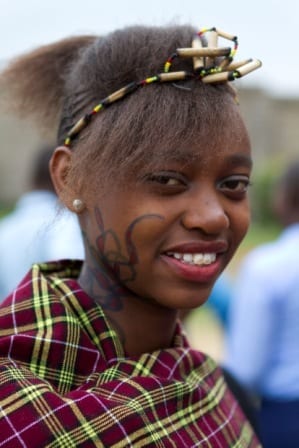
Culture has been known since man came to an existence and till today we are still practicing it. Through culture we learn how to be better people in the society like living as brothers and sisters. It’s very hard for a person to live without culture because it’s like an antelope at the middle of hungry lioness. A human being is a very complex creature. Every individual human has a distinguished attitude, behaviours as well as traits. It is only through culture where human beings act uniformly and live as a society. Thus, in a simple definition of culture we all agree that culture is a totality way of life of a certain given society as they live and continue to struggle against the nature.
Africa is believed to be the cornerstone of culture and every year, thousands of people from all over the world visit Africa to witness the beautiful culture, history and other amazing natural phenomena which Africa is blessed with and which it cherishes, for instance the earth surface features, wild animals, water bodies as well as hospitality of the people in the continent. Also, food, songs, costumes just to mention a few. Just as we are going to witness in this very day.
The way, we Africans handle our lives and whatever surrounds us; that is actually our culture, and it is through which we are identified. However, there are many different cultures from other communities and from other parts of the world, which remain to be the part of great adventure and identity to those people who live in those communities. We also recognize and appreciate their cultures. Wherever you are and wherever you live, your culture is of great value since it is the one which made you to be who you are today. Under no circumstance, a brave should not abandon his or her culture because if one abandons his or her culture, I dare to say he or she would abandon him or herself.
It is high time for us to protect all what we have in our culture and whatever is good should be taken to great heights and we should try all our level best to eliminate all those practices which are against human rights even if they have been practiced in our culture for centuries. Practices such as female genital mutilation, discrimination of any kind, torture to women and children and any kind of maltreatment to our society members. Culture is not static, it changes as the human being develops so let us not be prisoners of our own culture.
For those who have been here for four years will agree with us that we have been improving always from our first Cultural Day in 2010, 2011 and last year. The event is about commemorating our culture and other cultures beyond our boarders and beyond our continent. It must be well understood that, preserving our culture doesn’t mean to disrespect other peoples’ cultures. Cultures create and develop identities.
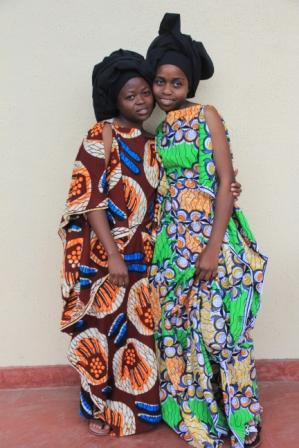
Today, and now, I highly call all students and staffs to try all our level best to love and feel proud of our culture. This is because it is believed that you will not know the importance of things unless they are taken away from you. Through the education that we get here at St Jude, we should enable ourselves to reach the millennium goals of fighting and eradicating poverty, diseases and ignorance which are the challenges facing the African continent. But also it will help us to reach the mission and vision of our school of preparing the future leaders of Tanzania and the world at large. Leaders who are responsible, respectful, honest, kind to all the people and our planet earth because if we destroy it, we also destroy ourselves in another way. I believe that, we are not Africans because we are only born in Africa but because Africa is born in our hearts.
Our culture is possible with our environment. The responsibility of preserving our environment is also part of our culture. William Mkufya, a famous Tanzanian writer in one of his book blamed the human being for destroying his own environment and if I may quote him, he says “The presence of modern human on earth is only a few thousand years old and yet have destroyed a huge portion of what nature has preserved for millions of years”. Ladies and gentlemen, let me take this opportunity to remind each one of us to take responsibility in preserving our environment, what exactly the nature has preserve for millions of years as Mkufya says.
Having said so, I believe that changes can also be brought by us, by working and cooperating with different people, even those who live beyond our shores. Through our talents, ideas and education that we get here at St Jude we can change ourselves as well as our society and other societies too. I truly believe that this young and brave generation will one day make a greater change and make the world a better place for every single person.
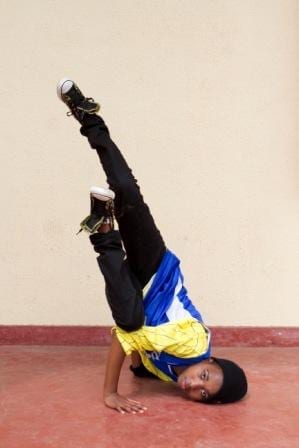
There are 120 tribes and so 120 languages in Tanzania ranging from Bantu Cushites to Nilotes. All these tribes have their cultures. Additionally, we are also blessed to be united by one language, Kiswahili and one country Tanzania.
Actually, there is indeed a great need of creating a balance between affirmation of the previous marginalized cultures by supporting them, and also appreciate the current dominant cultures putting forward and support their languages which are Kiswahili and other languages in our societies.
Ultimately, to make this long story short, may I call all of us with all love, kindness and sympathy to pray for Mzee Madiba who was the first president of South Africa to retain back his health and get better soon. GOD hears our voices, and we hope that Nelson Mandela will get well thus we say “Get well soon tata.”
God bless Africa, God bless Tanzania, and God bless St Jude.
Remember, “Jasiri haachi asili,” The brave do not abandon their culture.
Prepared by Eric, Enock and Hosiana – Form 5 students at St Jude’s
We’d like to introduce you to Catherine, mother of St Jude’s student Augustino who is in Standard 2. Catherine is a remarkable individual, a Tanzanian woman with immense compassion and resilience. Every day is a struggle for her, an upward battle against cyclical poverty. She is currently raising three children while also caring for her cousin’s child. This Mother’s Day we’d like to share the story of Catherine because her selflessness and great strength are an inspiration to everyone at St Jude’s and should be to the world.
Catherine, her husband and children live in dire conditions. The family of six rent one room in a shared compound with other families. It’s overcrowded and resources are scarce. The families share a water tap, toilet and wash room. There’s no internal plumbing, or electricity. Buckets of water for cooking, drinking, washing and cleaning are collected from a nearby tap for a small per-bucket fee. To support the family, her husband farms his plot of land in Babati which is three hours away, meaning during harvesting season he’ll be away from Catherine and the household. What he’ll manage to grow – maize and beans – and sell will be their main source of income.
Catherine is also pregnant and expecting her fourth child any day now. With the impending addition of a fifth child to her flock, she’ll need all the help in any way possible as every day she must think about where her family’s next meal will come from. One of her main concerns is having enough food for her children and herself. Like other Tanzanian mothers, she has more worries than most women around the globe. More than 12 million Tanzanians live below the poverty line and don’t have access to safe water, food or a proper education. The women then have to do menial work like selling vegetables on the side of the road; just to keep the family alive. Everyday, Catherine cooks a fish and peanut dish to sell in town and make a bit of money. She doesn’t have much but will use the few ingredients that she has.
It is a constant struggle for Catherine, but she continues on, and we do what we can at St Jude’s, which is to give her son, Augustino, a completely free education. It’s one less thing she now has to worry about. We provide her son hot, nutritious meals everyday, give him a safe environment to learn and expand his creativity and imagination. We want Augustino to teach his siblings what he learns, to help them with their studies. A proper education can transform lives and the success of our students is testament to that.
“I’ve seen a lot of difference since Augustino started studying here, he’s become smart, he’s more polite, he’s hardworking,” Catherine says. “I’m very thankful to St Jude’s.”
We fully support Catherine as she raises her family and love that we can help take some of the load off her shoulders. This Mother’s Day, we invite you to salute Catherine’s strength and all of the mothers of our St Jude’s students.
When Gemma first started building St Jude’s she searched for ways to create an identity and character that would distinguish the school from others. It had to be a school that students could feel a sense of ownership of and take pride in. One of the initiatives was to purchase a school bus, but because funds were spread extremely thin, purchasing a bus would have to take extreme sacrifice. Richard, Gemma’s husband, said to her, “You can’t have a school without a school bus.”
So Richard sold his Land Rover for a little white bus.
That little white bus would be painted royal blue and have “The School of St Jude” written in swirling gold across its body. For years “Little Blue” would carry hundreds of students to and from school battling unpaved dirt roads, four engine changes, countless tire replacements and numerous repairs. Little Blue would be retired in 2011 after nine long years of service. Its frame now rests proudly in the lower primary playground.
The St Jude’s bus fleet has grown in accordance with the expanding student body. With 150 new students every year for the last ten years, we’ve made it a high priority to maintain and expand our bus fleet, which currently stands at 22, serving over 1,600 students and more than 400 staff. Not only do the vehicles transport students and staff they also pick up produce, school equipment and building materials.
Every day our buses carry approximately 500 lower primary students and 150 staff to our campus in Moshono, along with 100 staff to our Smith Secondary campus in Usa River. Then on Friday, when about 500 upper primary students go home from boarding they are bused as well. Every six weeks, for mid-term break and end-of-term break, all secondary students go home too. These buses travel up to 45km away in some instances to get everyone home safe and sound.
For such a massive logistical operation, the buses go through 10,000 liters (2,700 gallons) of fuel per month. Our garage houses nine tradesman, a workshop supervisor, two mechanics, two apprentice mechanics, two panel beaters, one auto electrician and one welder. Thanks to numerous sponsors and donors over the past two years, we’ve been able to acquire five new Tata Buses that carry 50 percent more students and use 20 percent less fuel compared to other buses in the fleet. Most importantly we have 21 dedicated, responsible and safe drivers.
Having one school bus, let alone 22, is a blessing in Tanzania. Not only are we able to transport everybody safely to and from school everyday, there’s a sense of pride you feel when you see one of the colorful St Jude’s buses stroll along in Arusha.
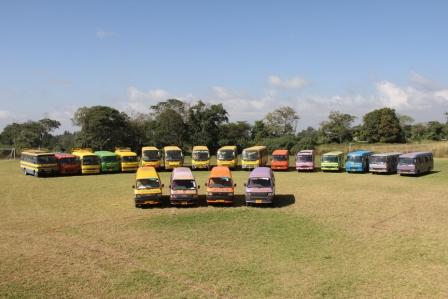
As part of our Annual Appeal, you can support the St Jude’s bus fleet by purchasing a seat on a bus, or our new Flamingo or Colobus themed buses. Get your piece of the St Jude’s puzzle and help transport our students and staff safely everyday!