For Semu, learning to communicate confidently was not simply part of his education, it became the foundation of his career and the inspiration behind an organisation now helping young Tanzanians find their own voices.
Semu, a 2022 graduate of The School of St Jude, completing his Bachelor’s Degree in Marketing and Public Relations at the Institute of Accountancy Arusha in 2027. However, his journey into communication, leadership and public speaking began much earlier at St Jude’s, where learning has always gone beyond the classroom.
During his years at St Jude’s, Semu participated in debates, public-speaking competitions, career days, leadership activities and mentorship program. These experiences helped him develop the confidence to express his ideas, engage with different audiences and recognise communication as a powerful tool for creating opportunities. Over time, Semu moved from being a student participating in these programs to becoming a mentor and judge at national and regional public-speaking competitions.
In August 2024, Semu founded Nena Hub after observing a clear gap in leadership development in Tanzania’s education system, particularly in access to practical communication and public speaking skills. These are skills that strongly influence education, employment, entrepreneurship, leadership and confidence, yet many students, especially in government schools, have few structured opportunities to develop them. Based in Arusha, Nena Hub works to equip young people with communication and public speaking skills that strengthen their employability, entrepreneurship and self-expression.
Semu leads the organisation alongside Program Director Gloria, a St Jude’s alum from the Class of 2023. Their small team also includes St Jude’s alumni Ramadhani, Athumani, Mary and Mwanahawa, who are currently pursuing their college studies.
In less than two years, Nena Hub has reached students at 11 schools across Arusha. Its programs are delivered free of charge to government schools, giving students who might otherwise have limited access to these opportunities the chance to develop valuable communication skills.
Now, Nena Hub has reached an important milestone after being selected for the Mastercard Foundation EdTech Fellowship and receiving a US$70,000 grant. The fellowship provides more than funding. It places the initiative within a wider ecosystem of innovators working to transform how young people learn and prepare for the future.
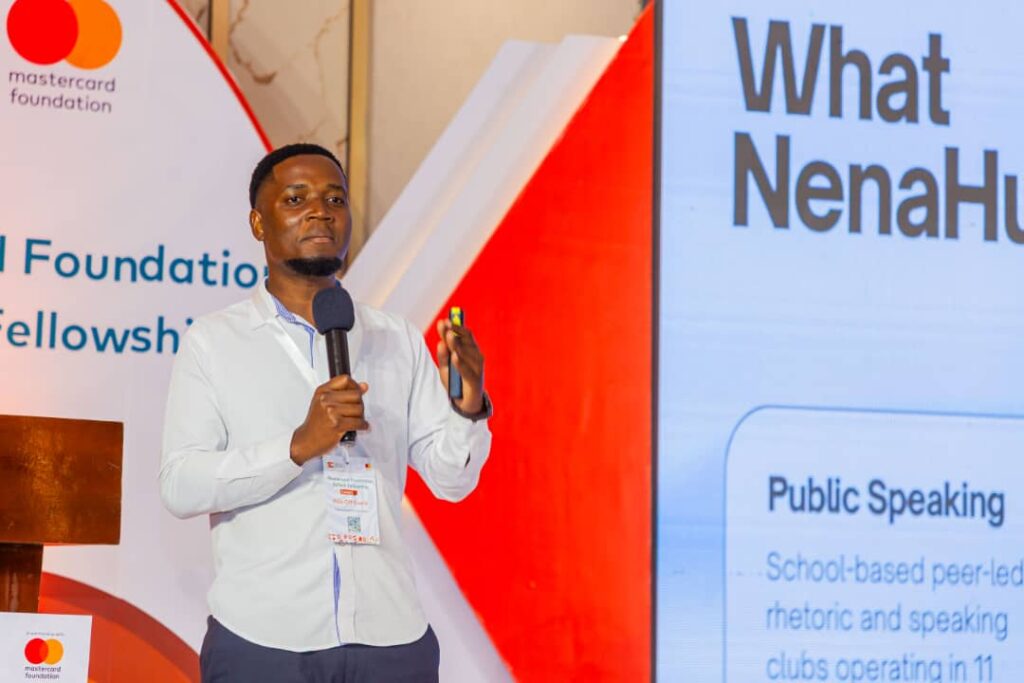
“St Jude’s played a bigger role in my journey by providing opportunities to develop public speaking skills through teachers, career days, and different school activities,” says Semu.
“The computer skills I gained at school have also been very useful in today’s world as well as the strong alumni support system that helped shape my approach to education, leadership and problem-solving,” Semu explains.
For Semu, communication is not an optional or secondary skill. He believes it determines whether young people can explain their ideas, succeed in interviews, pitch businesses, participate in leadership opportunities and advocate for themselves.
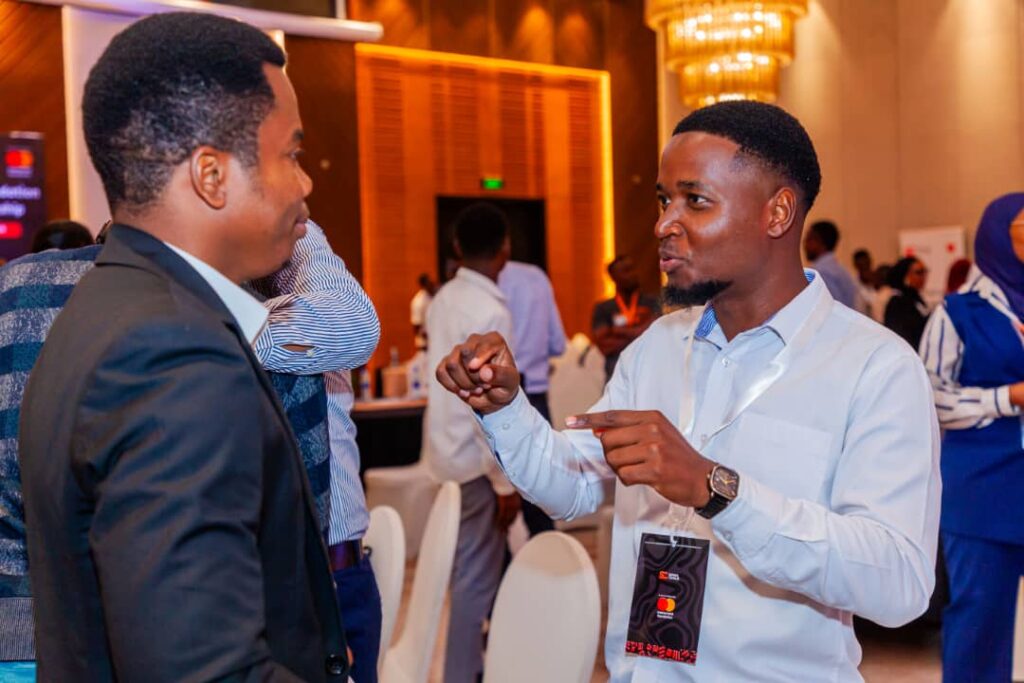
What began as one student discovering his voice at St Jude’s has grown into a movement helping hundreds of young people discover theirs.
When Lembris, a 2015 St Jude’s Form 6 graduate, dreamed of starting a school, he didn’t have much. What he did have was a 2.2-acre plot of land in Moshono, Arusha, gifted by his father. That land became the foundation for what would become Bright Lands School.
Lembris’ motivation to start a school comes from what he saw during his Community Service Year, when he taught mathematics and physics at a local government school in Arusha. There, he experienced overcrowded classrooms, limited resources and students with different learning needs being taught the same way. That experience stayed with him.
To raise the first capital, Lembris sold a piece of land he owned in Dodoma, which he bought during his Community Service Year. he began construction of two classrooms in July 2023. By the following year, he had completed the first classroom, along with essential facilities including two toilets, a kitchen, security and store huts and front entrance walls. However, he soon realised that one classroom was not enough to get him approval to open his gates. He needed three.
Rather than giving up, Lembris found another way forward.
As a civil engineer by profession and owner of an engineering company, he reinvested profits from his company to add more classrooms, buying learning resources and strengthening the school’s operations. Step by step, Bright Lands grew from an idea into a functioning learning centre. By July 2025, he managed to complete the three classrooms and was approved to open the gates with his first two students.
Today, the school has 64 students, three teachers, a cook, a security guard and a manager.
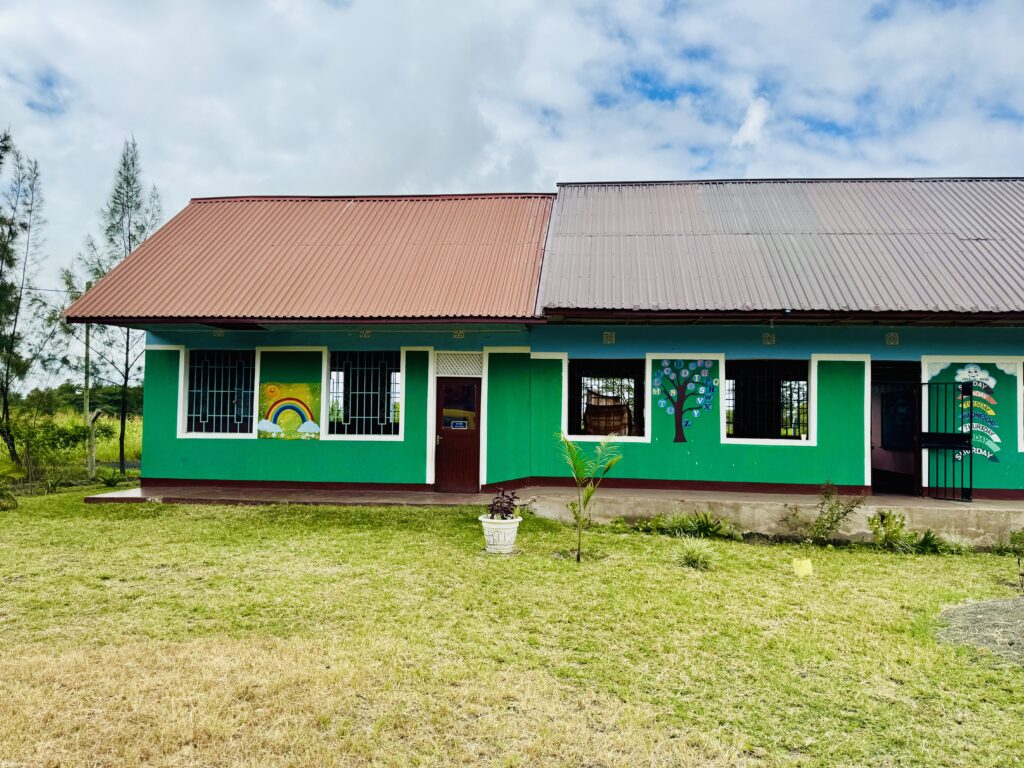
Through a low-fee model, Lembris is building a school that gives more families access to quality education while focusing on understanding, creativity, discipline and practical learning.
Now part of the third cohort of St Jude’s Next Frontier Incubator and Small Grants Program, Lembris is developing the business skills needed to grow Bright Lands School sustainably. He hopes to expand the school into a fully registered primary school in the coming years, bringing quality education to even more students in Tanzania.
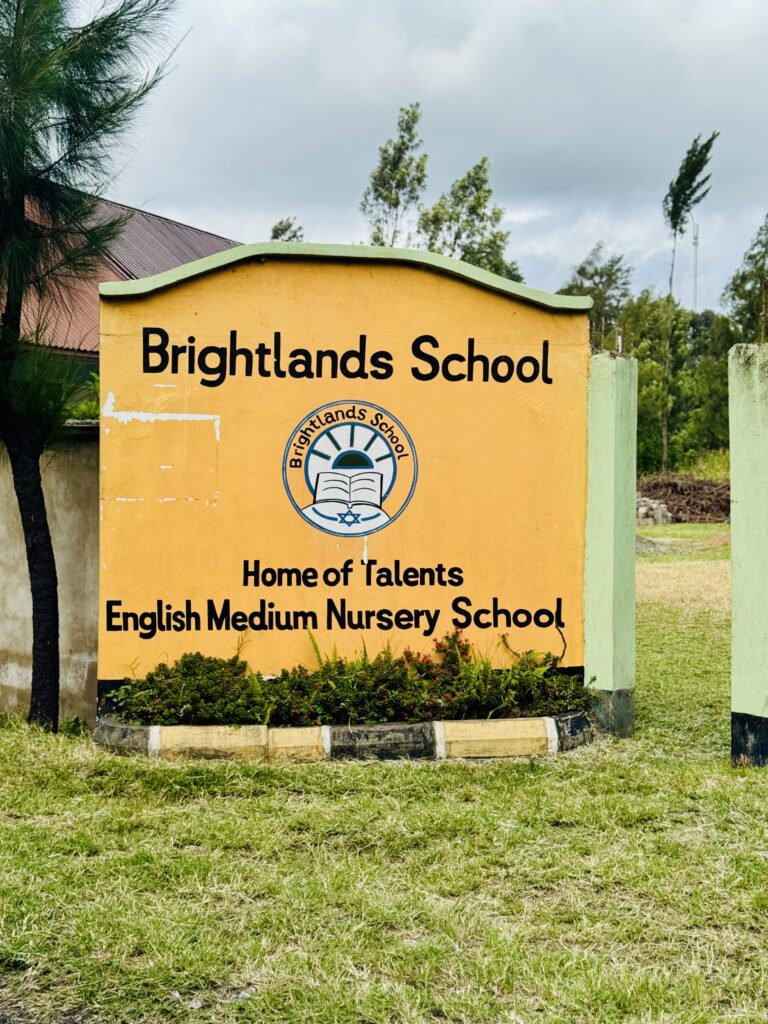
From welcoming just two students to educating 64 in its first year, Lembris is proving that impact does not always begin with perfect conditions. Sometimes, it begins with one piece of land, one bold decision and the discipline to keep building.
His journey is a powerful reminder of why The School of St Jude exists: to educate young people who will go on to lift their families, serve their communities and create opportunities for others.
The impact of your support can continue long after a student graduates from St Jude’s. By investing in education, you are helping young people build the skills, confidence and opportunities to shape their own futures and make a difference in their communities.
When Theresia and Irene joined St Jude’s as Standard 1 students in 2013, the library quickly became their favourite place.
“I didn’t know a school could have so many books,” Irene recalls.
They spent their free time reading, exchanging recommendations and sharing stories with classmates. Before long, they began writing stories of their own. Their first three books, Next to My Mommy, Secret of Colors and I Love Spaghetti became so popular among students that some pages went missing from being passed around so often.
By Form 3, the young writers wanted to create something with a deeper purpose. The idea for their next book, Uzuri (which means beauty in Kiswahili) was born: a story encouraging young girls to embrace their identity, believe in themselves and know they are enough.
The idea was strong, but after writing four pages, they became stuck. Support came through St Jude’s alumni network, which connected the girls with Beyond St Jude’s (BSJ) Special Programs Senior Manager Ms Vivian and Beyond St Jude’s and Career Development Programs Manager Mr Mussa. Together, they reached out to one of our supporters, Ms Cathy, who mentored the girls and helped them push through their writer’s block
In 2025, Theresia and Irene rewrote Uzuri from scratch. They fitted writing around classes, examinations and extracurricular activities, working in quiet library corners and empty classrooms whenever they found time.
“It took us a full year to bring all the ideas together,” Irene says. “Sometimes we experienced writer’s block, but we kept going.”
Currently, the pair are completing their Community Service Year (CSY) at St Jude's, with Theresia in the Marketing Department and Irene in the Alumni Office and hope their story will inspire other students to pursue their own creative ambitions.
Uzuri is proof of what can happen when students are given access to books, encouragement and people who believe in their ideas. One day, another young St Jude’s student may pick it up from the library shelf and realise that they too, can become an author.
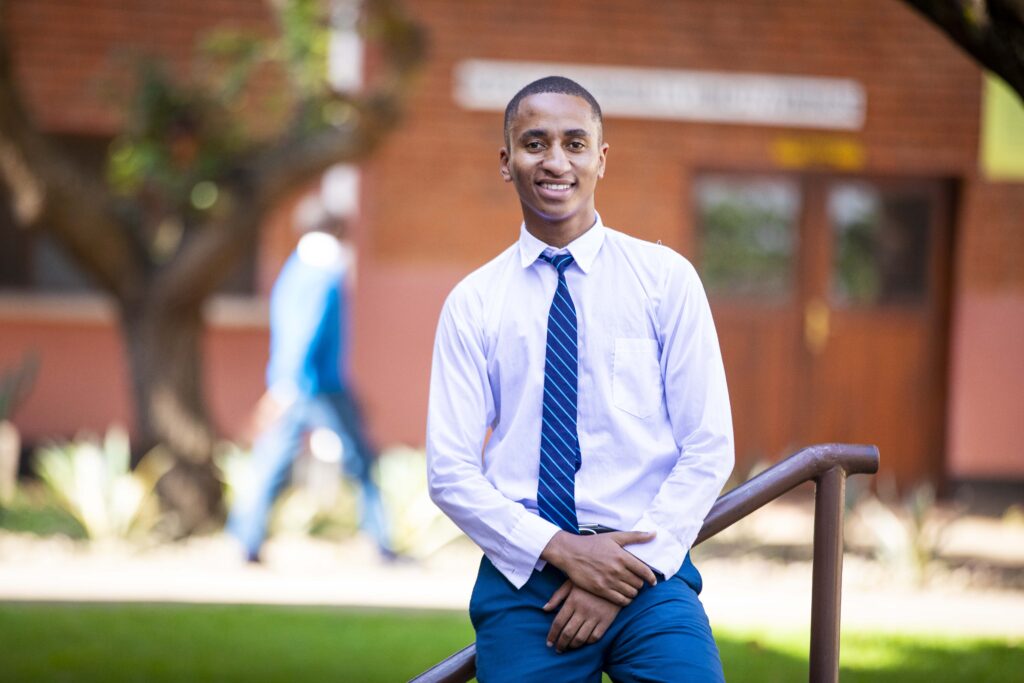
For Rogers, Class of 2024, the inspiration to make a difference came shortly after finishing high school. As he spent time with younger siblings, friends and students in local government schools, he noticed a challenge many young people silently face. Students were struggling with examinations, uncertain about career paths and lacking confidence when speaking in front of others. It was not because they lacked intelligence or potential. What they lacked was guidance, exposure, and encouragement.
Rogers is currently pursuing a Bachelor of Governance and Development at MS TCDC but joined forces with fellow St Jude’s alum James in 2024 to establish an NGO called We All Can Africa. Although James is currently in Mauritius pursuing a Bachelor of Science in Entrepreneurial Leadership, the two continue working together toward one shared vision to create a future where every student, regardless of background, has access to the skills, confidence and support needed to succeed both academically and personally.
“What pushed me most was seeing students who are capable but lack guidance and confidence,” Rogers explains. “Sometimes a student just needs someone to explain things differently and remind them that they are capable of succeeding.”
Through We All Can Africa, the team visits local government schools to conduct interactive sessions on public speaking, gender awareness, career guidance and exam preparation. Their mission goes beyond delivering motivational talks for a single afternoon. They want students to walk away feeling seen, informed, empowered and more confident about their future.
So far, the organisation has reached more than 200 students from three different local government schools around Arusha. For many students, it was the first time having open conversations about careers, confidence and practical study and exam techniques that can significantly improve performance.
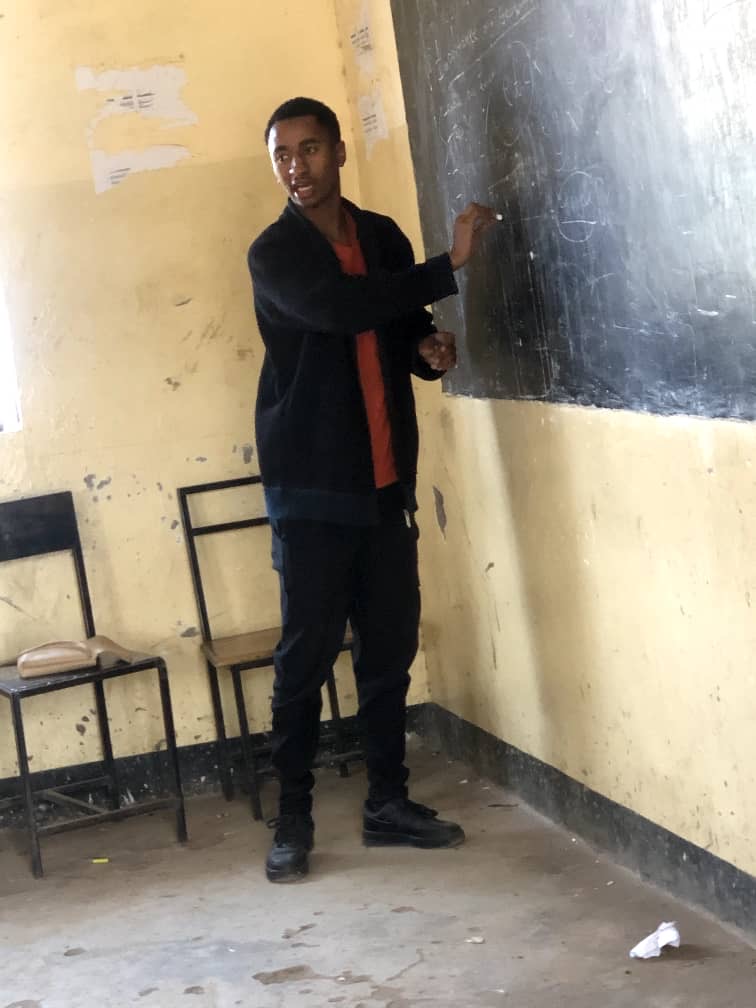
What makes their initiative especially impactful is how authentic and relatable it is. They understand the realities these students face because they have witnessed them closely in their own communities.
Rogers credits much of their inspiration and confidence to the environment they experienced at The School of St Jude.
“St Jude’s gave us exposure and taught us how to approach challenges with confidence,” Rogers says. “The support we received made us realise that we can also return and help others in a meaningful way.”
There is something deeply inspiring about young alumni who choose to return to their communities and build solutions instead of simply talking about the problems. Rogers and James could have focused solely on their personal journeys after graduation, but instead, they chose impact. They chose service. They chose to create opportunities for others.
Although their work is still growing, their vision is already clear. In early June, Rogers and the We All Can Africa team plan to host another session at a local secondary school, continuing their mission of reaching more students and opening more doors through awareness, guidance and encouragement.
Emmanuel, Form 4 graduate from the Class of 2020, is no stranger to innovation. The last time we caught up with him, he had developed his own automatic handwashing system to tackle hygiene challenges during the COVID-19 pandemic. Today, he’s taken his vision even further, turning local solutions into projects that impact communities across Africa.
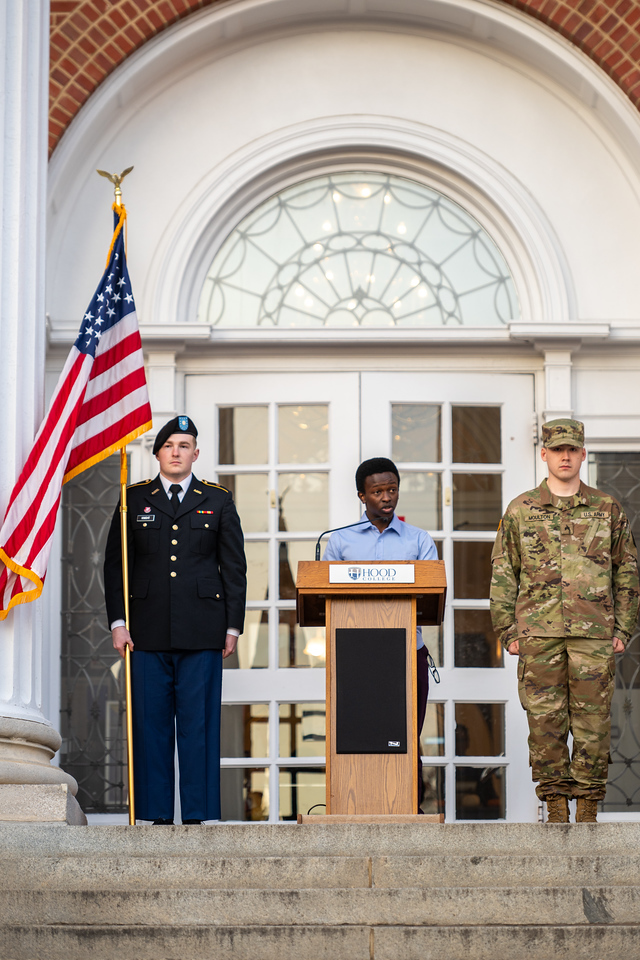
On the international stage: Emmanuel received the Davis Peace Prize in early 2024, an award that helped him establish the peace Library in Zanzibar.
During the COVID-19 pandemic, at just 18 years old, he saw the urgent need for clean water and proper hygiene to protect his community's health. Driven by his passion for children’s rights and a safe environment, he created a foot-operated handwashing machine to reduce hand contact and limit germ transmission.
His invention led to the installation of over 400 handwashing machines across northern Tanzania, significantly promoting better hygiene and helping to reduce the spread of the virus. This innovative effort quickly caught UNICEF’s attention, leading to his appointment as a youth ambassador, expanding his mission of improving health access and awareness.
Soon after, he was named one of 9 Young African Activists to Look Out for in 2022 by Global Citizen, furthering his advocacy horizon.
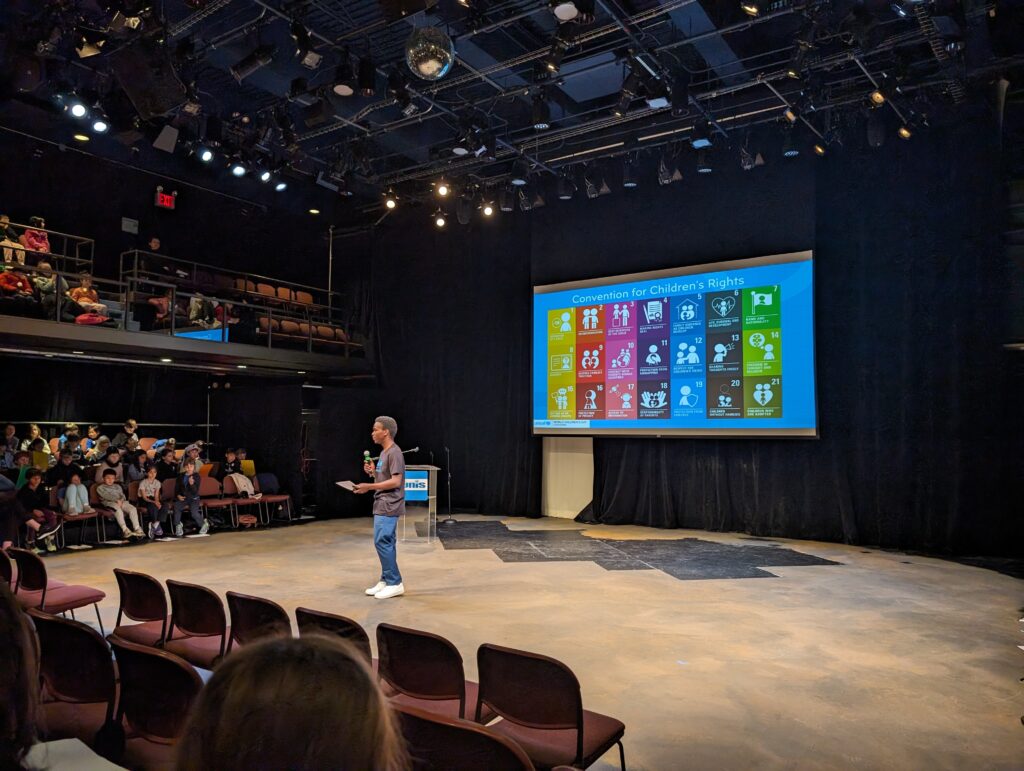
“It was an incredible honour that motivated me to keep pushing for change. This recognition opened doors for partnerships and collaborations, allowing him to scale his impact and inspire more youth to take action,” he says.
With the success of his handwashing machine, he went on to establish a community library under his peace project. The Peace Library in Kizimkazi, Zanzibar was established by Emmanuel, thanks to the Davis Peace Prize that he won in early 2024, and support from the Assalam Foundation.
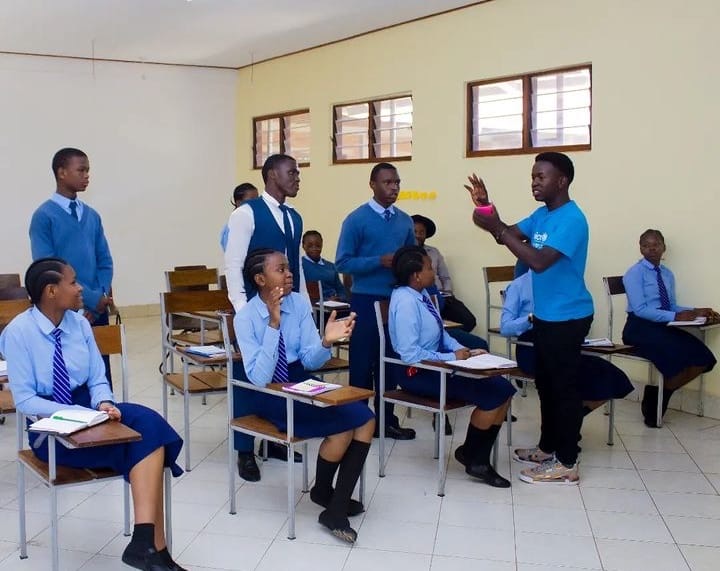
“The idea for the library was fuelled by my conviction that peace education begins with accessible knowledge. I envisioned a vibrant space where students could explore peace, leadership, and advocacy, equipping them to become peace ambassadors in their communities and fostering long-term social change,” he says.
Emmanuel describes it as more than just a library; it’s a thriving space where children can learn, connect with their cultural roots, and build community. With a theatre hall that accommodates over 400 people, the library hosts gatherings, events, and features screens displaying educational resources, opening doors to knowledge and connections beyond Zanzibar.
His mission? “I want to inspire African youth to create change,” he says.
Through workshops and public speaking, he reaches young people across the continent, rallying them to advocate for climate, education, and peace. His journey is a call to St Jude’s alumni, showing the impact they can have in leading Africa forward.
Growing up in Tanzania’s busy cities, Benson was surrounded by the roar of motorbikes and endless car horns. But beneath the everyday chaos, he saw something many missed; a pattern of problems such as youth unemployment, urban congestion, and rising pollution fuelled by an outdated way of moving people and packages.
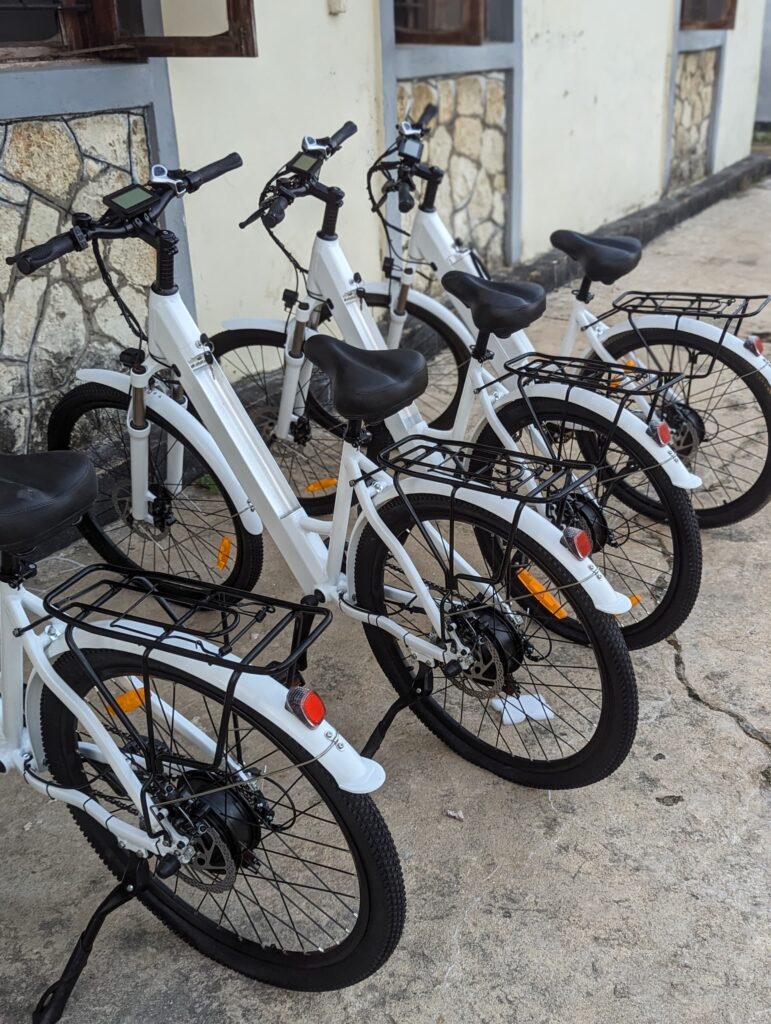
With a childhood friend and a shared vision for a greener future, Benson co-founded FikaChu, a smart, electric bicycle delivery platform designed to tackle three major urban challenges with one bold idea. They source components from original equipment manufacturers (OEMs) in Asia, then assemble the bicycles and integrate them with their mobile app in Tanzania.
"We kept asking ourselves, what if the mobility solution could also create jobs and clean the air? That’s how FikaChu was born,” says Benson.
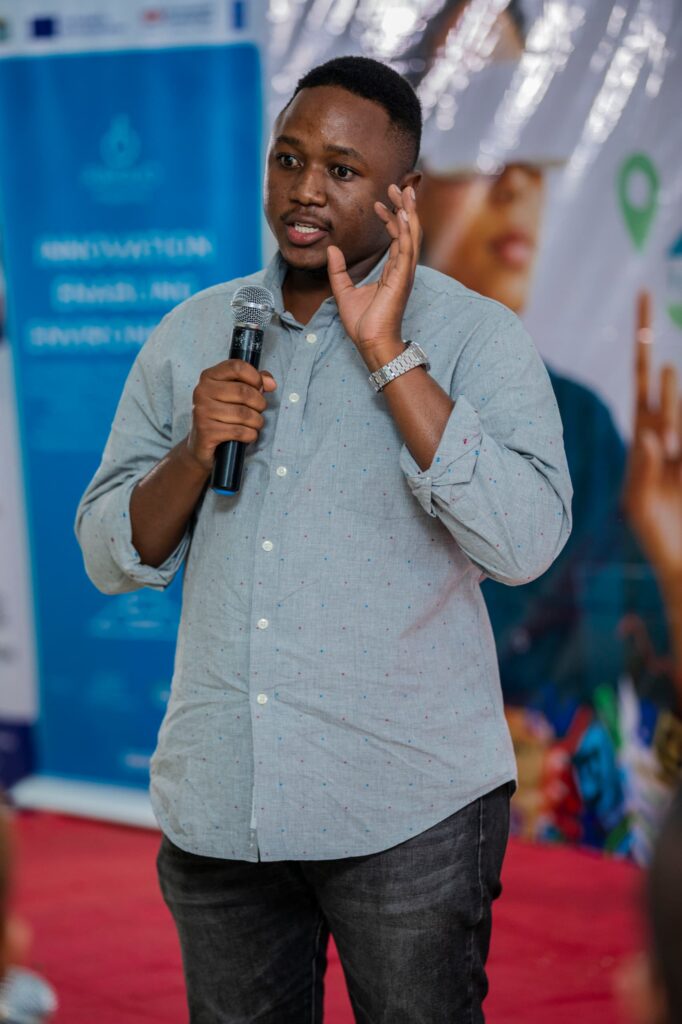
The concept is simple, but the impact is profound. Benson envisions that FikaChu connects small and medium-sized businesses with customers in Dar es Salaam, through a fleet of gig workers using electric bikes. No personal vehicle is required, just scan, ride, deliver, and return. The result? A remarkable 94% reduction in emissions compared to traditional motorbike deliveries.
“A typical internal combustion engine (ICE) motorcycle emits about 100g of CO2 per kilometre, while our electric bikes emit only 6g, that’s just 6%,” says Benson.
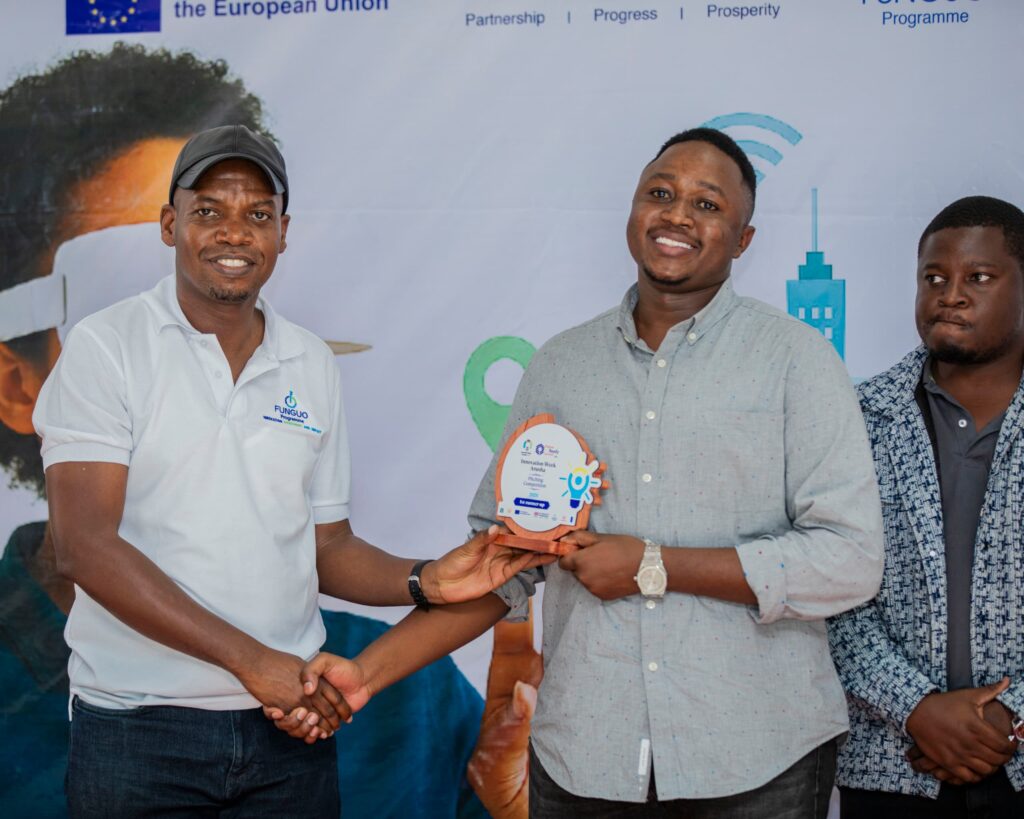
Earlier this year, Benson took FikaChu to the national stage at Innovation Week hosted by the Institute of Accountancy Arusha. It was his first time pitching in front of a large crowd, and he had just two minutes to make a lasting impression.
“The hardest part wasn’t the nerves. It was condensing everything our why, our how our vision into something unforgettable,” he says.
He did just that. Out of more than 30 innovators, Benson took home the first runner-up award validating that FikaChu was more than a clever idea. It was a movement in motion. Today, FikaChu is in its pilot phase, weaving through the streets of Tanzania as the team tests, adapts, and dreams bigger. They’re refining logistics, listening to feedback, and laying the groundwork for scale, all while keeping people and planet at the core of every decision.
“We’re not just building a company; we’re building a community. And we’re wide open to
partnerships, support, and collaboration,” he adds.
For Benson, innovation doesn’t begin in a lab or a corner office; it begins with courage. The courage to look at a daily problem and ask, what if?
“To any young person with an idea; start. Don’t wait for the perfect moment. Fail forward if you must, but move,” he adds.
When asked about how he competes with traditional motorbikes (bodaboda) he explained their approach.
“Before accepting a delivery task, we provide the rider or customer with a trip comparison analysis. This includes the estimated time it would take using a FikaChu e-bike versus a bodaboda, the amount of fuel a motorbike would consume, and the total cost savings they would get by choosing our service. We also show how much CO2 emissions they can avoid by going electric. It’s not just about speed, it’s about making an informed, ecofriendly, and cost-effective choice,” he says
Through FikaChu, Benson isn’t just delivering goods; he’s delivering hope, a cleaner future, one ride at a time. With a growing fleet of five electric bikes, each capable of covering up to 50 kilometres on a single charge, he’s proving that small steps can drive big change. So far, FikaChu has successfully completed over 1,300 deliveries, and in the process, opened a new doorway to employment for young Tanzanians eager to earn, learn, and contribute to a greener economy.
We are immensely proud of our alumni like Benson, whose journey began with a dream to learn and make a difference. He has transformed challenges into opportunities for youth, communities, and the environment.