As a developing African nation, Tanzania faces many ongoing social issues. These come in a variety of areas, including education, health, and gender equality, and can cause incredible hardship for those affected. These issues place a particular strain on Tanzania’s poor, who lack the resources, knowledge and opportunities to break free from the cycle of poverty.
The facts below illustrate some of the issues that many Tanzanian’s face, and show why it is important for organisations such as The School of St Jude to try and create social change within the country:
1. Primary school education has been free in Tanzania since 2002, but families still have the responsibility to pay for uniforms, exam fees and school supplies, (http://www.hopefortanzania.org/tanzania/) something many families cannot afford. St Jude’s makes a concerted effort to ensure that families are not financially burdened by their children’s education.
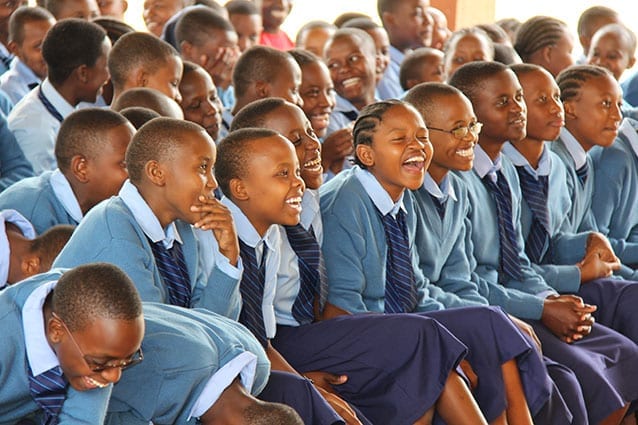
2. Secondary schools in Tanzania are fee paying. (http://www.hopefortanzania.org/tanzania/). Students are also only able to progress on to secondary school if they pass their Standard 7 (end of Primary) exam. For these two reasons, many children are unable to continue on to secondary education, with the level for secondary school enrollment (% gross) in Tanzania only 35.09% (http://www.indexmundi.com/facts/tanzania/school-enrollment). This is a long way behind most African nations, including Zambia (55.94%), Uganda (58.34%), and Malawi (75.57%) (http://www.indexmundi.com/facts/)
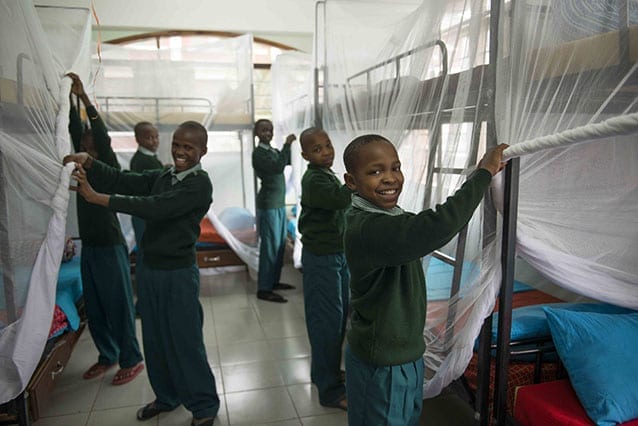
3. The leading cause of death in children who survive the neonatal period is malaria. (http://www.hopefortanzania.org/tanzania/). Boarding students at St Jude’s are provided with mosquito nets in their rooms to prevent malaria. If a student becomes sick and malaria is suspected, they are taken to the hospital where they are tested and given an anti-malarial if necessary.
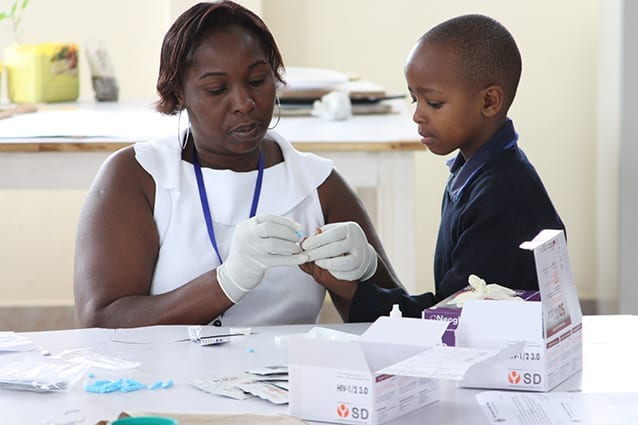
4. The leading cause of death for adults in Tanzania is HIV/AIDS (http://www.hopefortanzania.org/tanzania/). In 2009, the prevalence rate among the adult population was 5.6%; approximately 1.4 million people (http://www.indexmundi.com/tanzania/demographics_profile.html). Only 35% of 15-19 year old female adolescents have a comprehensive knowledge of HIV (http://www.shika.org.uk/our-work/where-we-work/tanzania-facts/), which leads to many females contracting HIV in their adult life.
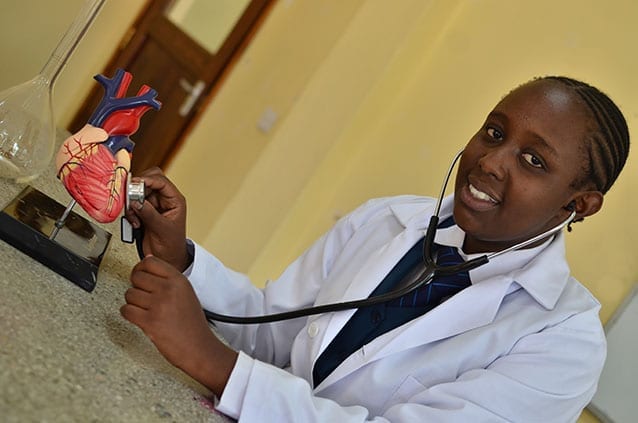
5. The infant mortality rate in Tanzania is 45.1 per 1,000 live births (http://www.indexmundi.com/tanzania/infant_mortality_rate.html). Over time, it is St Jude’s hope that through the power of education and proper care the overall health of Tanzanians will improve, leading to a higher life-expectancy and better quality of life
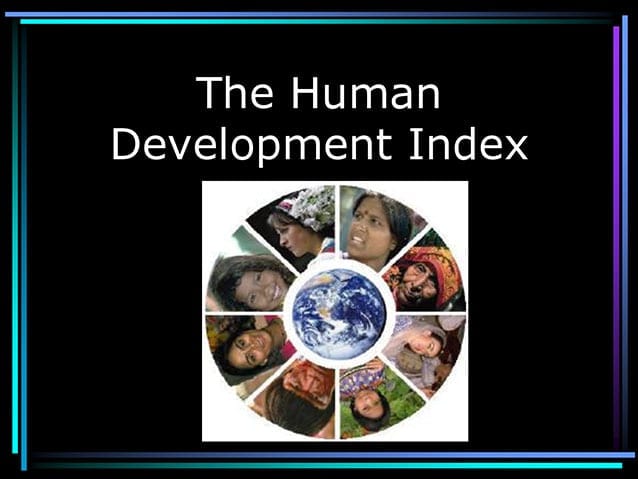
6. On the Human Development Index of the United Nations Development Programme, the United Republic of Tanzania ranked 163rd of 170 countries in 2000, and 152nd of 187 countries in 2013 (http://www.ruralpovertyportal.org/country/home/tags/tanzania). This shows that Tanzania is improving in a number of areas, but still lags a long way behind most nations in terms of its social development.
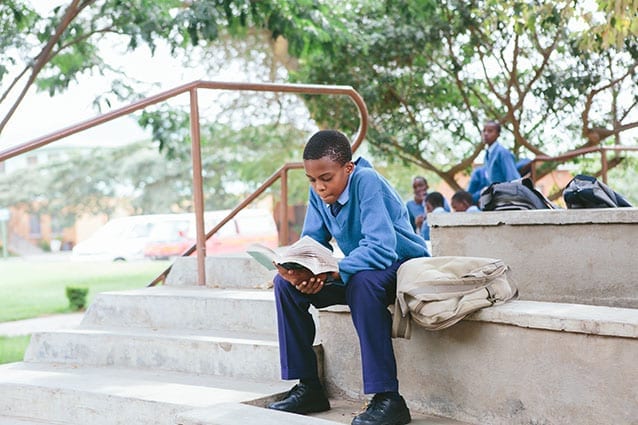
7. The average school life expectancy of students (primary through to tertiary education) is nine years (http://www.indexmundi.com/tanzania/demographics_profile.html). It is St Jude’s goal that its students continue their education all the way through primary and secondary school, and then seek out tertiary education if they desire.
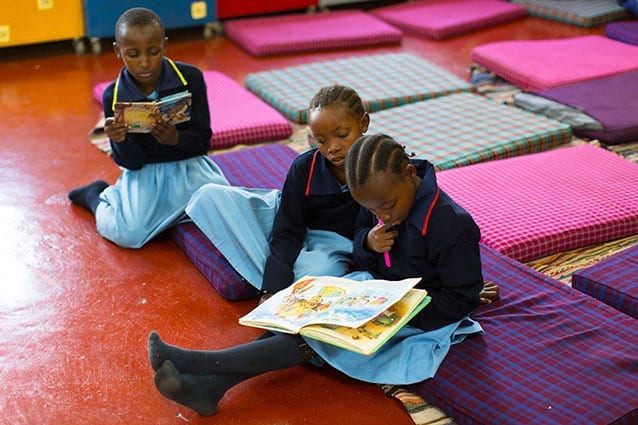
8. The literacy rates of 15-24 year olds in Tanzania are: Male 83% Female 76.9%. This is a clear indication that females are still not receiving the access to education that males are. St Jude’s makes a concerted effort to give girls equal access to an education, with 58% of our current students being female.
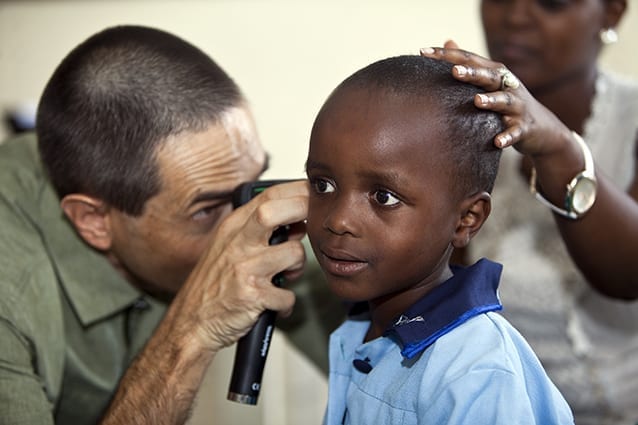
9. There were 0.70 hospital beds per 1,000 people in Tanzania of 2010. (http://www.indexmundi.com/facts/tanzania/hospital-beds). The number of physicians per 1,000 people in Tanzania was 0.01 as of 2010 (http://www.indexmundi.com/facts/tanzania/physicians). Access to medical services is still very limited, especially to the poor. St Jude’s employs a Health and Welfare team to make sure that our students are healthy and ready to learn. 29.5% of our senior students now have plans to study medicine upon completion of their St Jude’s education.
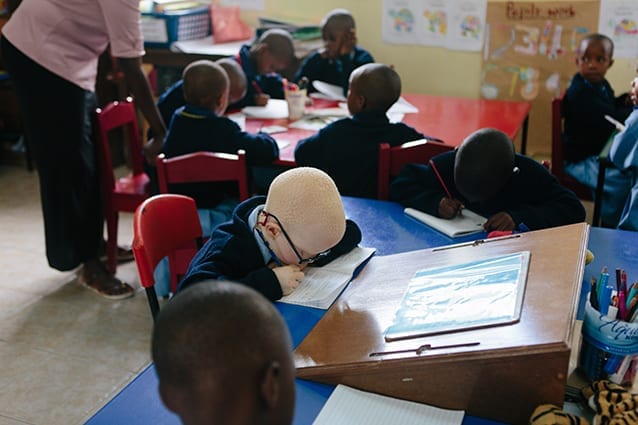
10. The pupil to teacher ratio in Tanzanian government primary schools is 49:1, with an average of 66 students per class (http://www.unicef.org/tanzania/6911_10874.html). We often witness class sizes of up to 200 students in nearby schools. Large class sizes mean that students lack the necessary attention for a good education. St Jude’s class sizes average less than 28 students, ensuring that all pupils have access to the assistance of their teacher.
Selemani is a gently spoken boy who loves maths and wants to be a teacher.
He has just been accepted to The School of St Jude, where he will start in grade Standard 1 in January. He was selected because we saw his academic potential and his family is unable to support his educational needs.
By joining our first primary school grade, Selemani will become part of a large ripple effect The School of St Jude has been creating in Arusha and the whole of Tanzania since 2002.
The ripple starts with a student and extends to the whole community when the school buys classroom materials, food, uniforms and other supplies locally. When we hire local teachers, cleaners, cooks, administrative staff, bus drivers and technicians, the ripple gets wider. The effect is unstoppable.
Selemani lives in a one-room mud house with his mother, father and two older sisters. There are 13 other families living in the same compound. His family buys buckets of water from a nearby tap and they have one light. At night, the entire family shares a mattress.
Selemani’s family owns no animals or land to farm. His father is a casual builder in town, finding work wherever he can, and his mother sits on the side of the road selling dried fish and cassava, a root vegetable. Each month they earn just enough to pay for rent and food. With their combined income amounting to under $3 a day, it is little wonder there is no money left to save or to pay for schoolbooks.
Until now, Selemani’s family has had little opportunity to improve their situation. Now, however, he will receive books, uniforms, medical checks, nutritious meals and a high-quality education that will allow him to go on and become a leader in whatever professional field he chooses in the future.
Over the coming weeks we will be telling you all about the ripples that St Jude’s has been creating.
If you follow this link you will see how simple it is to become a sponsor.
When a teacher receives a job at St Jude’s it has a big impact on their life.
At St Jude’s teachers are provided with stable employment, amazing resources and a competitive salary. On top of that they receive health insurance, daily nutritious meals and transport to and from work.
All teachers are supported through ongoing professional development through a teacher mentor program. International teacher mentors volunteer their time to help local teachers learn educational techniques from all over the world and ensure they can perfect their English.
With so many extremely under resourced schools in Tanzania and with a high unemployment rate, all of our teachers are aware of the positive impact their job has on their overall life.
A stable job also means that all of our teachers’ families benefit too.
“Many Tanzanian people are poor. There are some families who take their kids to local primary school, they can’t afford it. The salary helped not only me but also my family. I can help my parents and some children also needed my help. There are children out there who sometimes don’t have money to buy their school uniforms or books, I can’t help them that much but I can afford to buy one school uniform. If I was not working here, if I am not working here, it means I could not afford to pay bills,” says Amina, Maths Teacher, Lower Primary.
Listen to our teachers talk about how working at St Jude’s has impacted on their lives.
Teachers play such a vital role in turning our students into future leaders. They do an amazing job working hard to create brilliant minds and successful, well-rounded adults.
“I think that with the education that they have received at St Jude’s, they’re going to stand out in the crowd because they’ve got something that’s different from other children. So, I think by getting the education here it’s going to help the whole community. Not only Arusha, but all over Tanzania,” says Julieth, a St Jude’s teacher.
This is just another part of the ripple effect caused by educating one of the poorest and brightest students in the Arusha region. Please consider starting your own ripple today by sponsoring a student or teacher.
Since sending out the latest newsletter we are excited to have all four water heaters purchased! This year’s Every Piece Counts appeal has gone really well, and we're so grateful for all of you who have stepped up to contribute toward a piece of St Jude’s.
Often it is the smallest of ideas which make the biggest difference. Our new water heaters use sump oil to generate energy and heat a thousand litres of water. It is the brainchild of a Tanzanian man who developed the technology to reuse oil from the 22 buses at The School of St Jude. His invention has made the cooks’ job a lot easier because it means they won’t have to worry about water limitations and will have access to hot water. It is one of the main reasons why the school pushed for a water heater so it could reduce the amount of water used in the kitchen. “We use too much water in the kitchen so we want to try to lower the quantity of water around 50 per cent and it’ll mean our water resources will last longer,” Acting School Director Shean Gannon says.
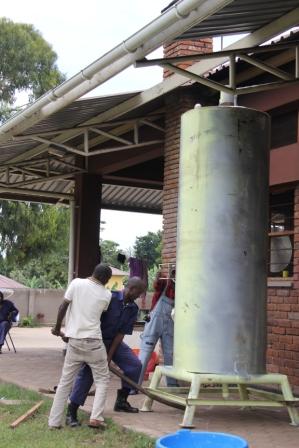
Hot water now flows from the taps in the kitchens, and the cooks will not have to use cold water to scrub and clean plates. It is a big challenge for our cooks to prepare more than 500 hot, nutritious meals for students and staff every day on each campus. They had been accustomed to sitting and washing plates in big plastic buckets. Most do not have access to hot, running water at home so it has been a big adjustment. But having hot water will have obvious hygiene benefits as it will mostly kill germs and bugs.
The water heaters would not have been possible without the help of generous donors who gave $3,000 each so they could be purchased. Eventually, the school hopes to install more water heaters around the school. “One of the problems is getting people to change their habits. They’re not used to hot water so it’ll take a while. Once we have got them up and running and using it then we will start introducing it to the other kitchens as well,” Shean says. This would mean that eventually every kitchen in the upper and primary sections of the school will have hot, running water!
As you can see, the Every Piece Counts appeal is really making a difference. Generous donors have also contributed towards buying play equipment, a school bus, blocks of land and desk and chairs for our students. It is fantastic to see how many people are willing to give and help our children have the best, possible education. “The school is very appreciative of the money that people donate. We live and die by our sponsors and donors, and people that support us. Only through the generosity at the school, can we continue in providing a free education to Tanzanians so we’d like to thank them and assure them that the money we donate is helping the school in achieving its goals,” Shean says.
Our next focus is providing more boarding accommodation for our secondary students at the Usa River Campus. We are expecting another 170 students moving from primary next year, so we need to be able to house all those students. You can help too! The school still desperately needs more computers, desk chairs, and food so we can adequately provide for all of our bright young, students.
There are still many items that you can purchase for St Jude’s. Which will be your piece in the puzzle? Remember: Every piece counts in the fight against poverty through education.
The team at St Jude’s is constantly amazed by our supporters who take up the mantle to generously donate their time to spread the word about the school. Marg Dawson from Castlemaine in Central Victoria is one such special person who hosts speaking events back in Australia to raise awareness and support of St Jude’s.
Marg’s a retired school teacher and her love for St Jude’s developed after hearing Gemma talk at an event in the Australian town of Bendigo in 2009. Marg’s support for the school is unwavering. Not only does she sponsor Margeth from Standard 3 and a boarding room, she also was lucky enough to visit the school with her sister Libby in 2012 as part of our September Cultural Tour. Meeting her sponsor student for the first-time proved to be an amazing experience for her. “I found it very emotional meeting Margeth and her family. They live in the poorest of conditions but we were made to feel so welcome and they were so happy. We shared lunched and played with Margeth and her friends numerous times whilst we are at the school which was great fun,” Marg says. She also loved the friendliness of the staff and students and the calibre of the buildings at the Sisia and Smith campuses.
After returning from her visit, it became her and Libby’s mission to tell everyone about St Jude’s. She told her friends about it and they donated a day’s takings when they did a fundraising event in November. Marg and Libby were on hand to give out photobooks, maps, DVDs, and brochures to promote the school. Sarah Henry, our Australian coordinator, based in Brisbane can send out St Jude’s material for all speaking events. Marg spoke about St Jude’s at a Country Women Association’s meeting and to this day she continues to look for opportunities to tell more people about the wonderful students, staff and volunteers in Tanzania. Marg recognises that by talking to people about St Jude’s she can help transform the lives of our students. “It doesn’t matter what you do, whether it’s a fundraising activity, or talking to one person, just tell everyone what a fantastic school St Jude’s is. It really is making a difference to so many people,” she says.
Marg’s advice is to look for any fundraising activities happening in your area and if you can, to come over and see how St Jude’s operates! “This will certainly inspire you, and on your return you can’t help but speak passionately about what an amazing place you have the privilege to be involved with,” she says.
Australia’s Rotary community crossed paths with a young woman with a big heart, $10 in her pocket, and a dream to fulfill. What they did next changed the lives of thousands of Northern Tanzanian families forever.
When Gemma Sisia went back to Australia after her life-changing stay in Africa, she knew she would have to pull off a major fundraising feat in order to obtain the money necessary to build the school of her dreams.
It was her dad who had the brilliant idea. On his advice, she contacted Rotary, essentially a network of passionate individuals with a history of pulling together to help others.
Gemma and a family friend, David Steller, worked the phones and in no time engaged members of local Rotary clubs in Australia, who, in turn, brought local schools on board.
Together this group of energetic idealists found an ingenious way of communicating with a large number of people: they put up a table in a shopping mall where volunteers took turns selling $2 paper bricks (made using clip art and a photocopier) representing the building works that needed financing. In a few months, Gemma managed to raise the necessary funds.
Thus began the long-term partnership between The School of St Jude and Rotary.
Gemma’s inspiring story and her reputation as a passionate and engaging speaker led to many invitations to speak at Rotary Clubs. From then on, the number of people, Rotary clubs, schools, institutions, churches and businesses interested in supporting the cause snowballed.
When it was time to actually build the school, Rotarians did not pull back to watch from a distance. Armidale Central Rotary Club organized a group of 13 volunteers to come and build the first block of classrooms in 2000. This was the first of many volunteer teams of Rotarians to come to Arusha, roll up their sleeves, and get personally involved with the school.
Rotarians who remained in Australia never missed a beat. They helped with the collection and transportation of computers, library and school books, teaching aids, classroom equipment, sports equipment, sewing machines, clothes and an endless list of goods.
When the time came to give St Jude’s tax-deductible status, the school was registered as an official Rotary project.
The story of this friendship is still being told. Many Rotarians visit us each year. They are generous sponsors of our students, teachers, buses and boarding rooms. Our partnership with the Rotary community is one of our most treasured assets to this day.
“We couldn’t have made it without the Rotarians,” says Gemma.