In a restaurant garden the graduates came dressed to impress. The sun shone as they began arriving. Alongside the food and drink were speeches from the school founder Gemma, the Community Service Year interns, the Beyond St Jude’s team and other graduates. It was more than just a school reunion; it was family reunion for the School of St Jude.
For Enock, the reunion was part of a very happy weekend of events.
“It was our first ever reunion and one of my best weekends of 2016. I had so much fun and 24 hours later I received my university acceptance news!”
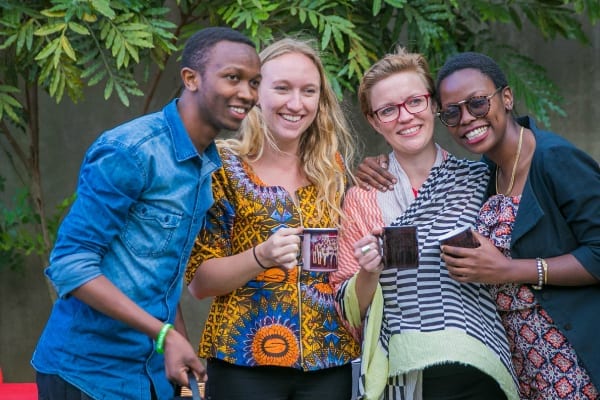
The whole event was entrusted to a select number of interns and they pulled it off wonderfully! The staff who were lucky enough to be invited were all highly impressed by what the interns had organised. It was not just a social event, it became an opportunity for past students to communicate their ideas for the future with one another, with the school and with a few current students who were in attendance.
The event was a great opportunity to be reacquainted with everyone, as alongside our Community Service Year interns were the students who had decided to move straight on to university. Those who have spent the past year at university, including Jackson and Editha, got up to share tips and stories to help our interns for the year ahead. Jackson warned his peers about the struggles of budgeting, living with new people and coming to class adequately prepared to learn.
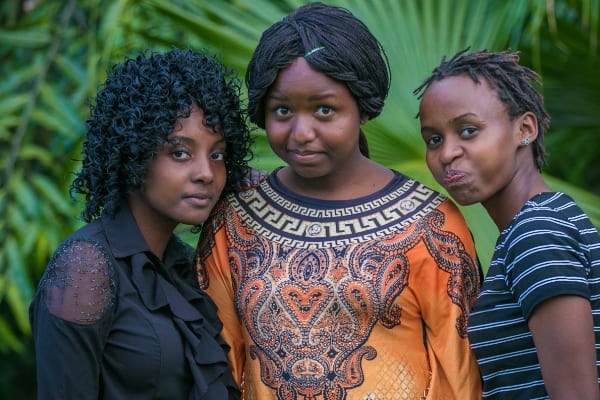
Community Service Year interns, Joseph and Anna, shared an overview of how they felt their Community Service Year had been and what it had taught them. Joseph explained how proud he is to be from St Jude’s.
"I realised my colleagues and new friends treat me with great respect simply because I come from St Jude’s.”
It was heart-warming to see them all so excited to spend time with each other and share their stories.
“I haven’t seen some of these people for a year now, so it’s been really fun!” said Edina.
Anna thought the day was incredibly special.
“This was the first one, there will never be a reunion like this again. Of course, many will follow on from us, but this is the first! I loved everything – catching up with my classmates, many whom I have not seen in quite some time, and I loved the food!” She said.
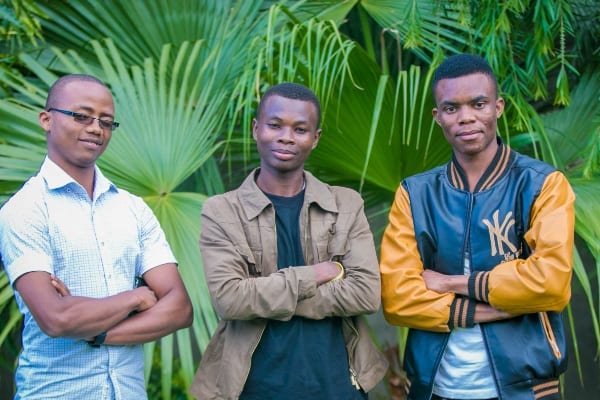
“What I won’t forget about this day is that this has been the funnest day of my life. We have not all been together since school finished, and may never all be together again. I have no words to express how special this is.”
Sadly, some of the Community Service Year interns who had chosen to keep working until they leave for university were not in attendance as they had too many papers to grade and exams to prepare. Talk about good work ethic!
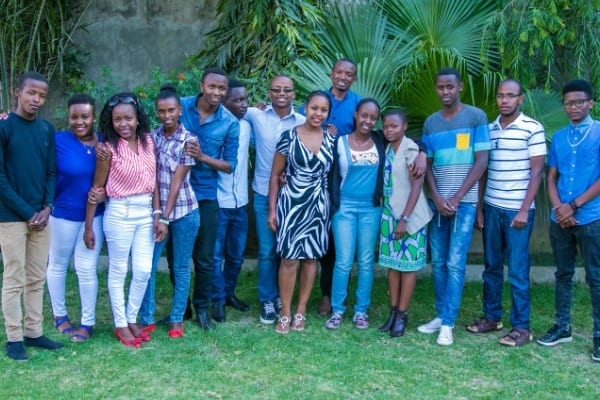
It was clear that even after all this time, St Jude’s students will always be family to one another. This bond cannot be broken by time and distance.
The School of St Jude is not just a school, it is a family that will stay connected for years to come. We look forward to many more fun filled reunions in the future!
Want to help St Jude’s continue to educate future leaders? Sponsor a student today.
Two St Jude’s students who love all things that fizzle and pop were invited to participate in this years Tanzania Young Scientist (TYS) competition with their proud teacher Humprey Nkya.
Their project, ‘Developing a sustainable method of mushroom production for poor people using plant waste materials’, involves growing mushrooms in a way that can be easily adapted for local families who farm vegetable plots in Arusha.
As well as a valuable learning experience for the students, it was also a learning experience for our Biology head of department, Humphrey Nkya.
“I had the opportunity to meet and share science ideas with teachers from all regions of Tanzania. With the experience I got, I can now provide better advice and guidance to our students and provide them with the support to grow their ideas and skills for science projects”.
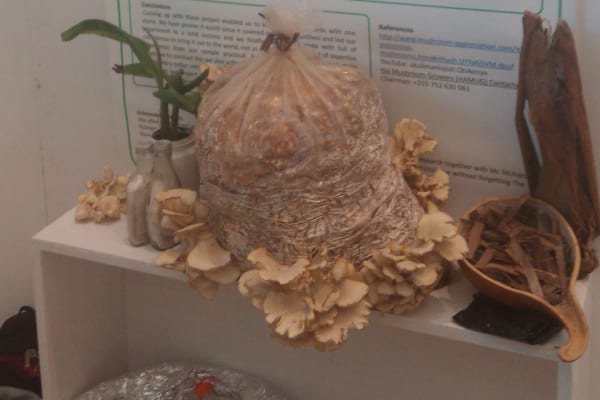
The two girls, Arafra and Lillian, were awarded a certificate of participation for their project.
“We grew the mushrooms and looked after them every day.” Arafra proudly explains. “We then had to write up our experiment like in a science paper.”
Lilian told us "The aim of the project was to find an alternative source of food for poor farmers. Mushrooms are a great source of nutrients people may not normally get in their diet”.
“They are easy to grow and don’t take a lot of time, so they are a really great option for poor people in Tanzania” Arafra said.
The girls learnt a lot through the project about scientific studies, practice and nutrition which will be helpful for the two in their future careers. Arafra wants to be an actuary and Lilian wants to be a neurosurgeon or a cardiac surgeon.
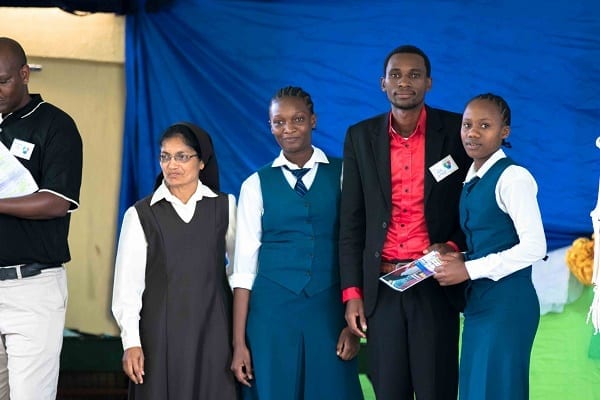
Other high flying science students were recently invited to attend the Nelson Mandela African Institute of Science and Technology to present their new inventions and projects. Eric is one of the students invited, he presented his automatic vending machine.
“The vending machine uses old computer parts programmed in a specific way so that people can purchase drinks when shops are closed. I researched the pros and cons of the system and came up with a list of requirements for places you may be able to install it”.
The project was also well received at our science day and at our careers day.
Although Eric loves science he is planning to be an accountant in the future.
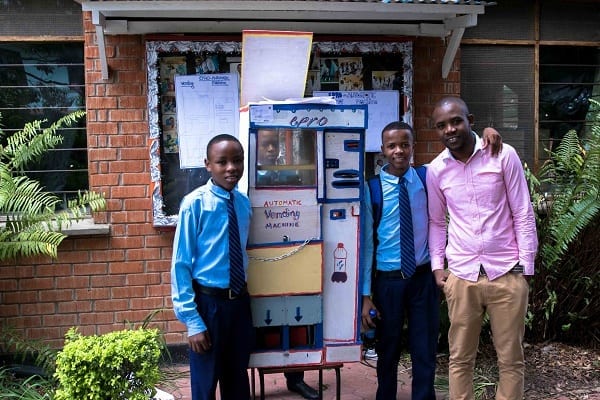
The future is also something Eric’s Physics teacher Hashim, who accompanied him on the visit, is also looking forward to.
“I am very proud of them. I am looking forward to next year when we will also compete!”
These achievements are the latest example of our commitment to fostering a new generation of scientists in Tanzania.
Our students have excelled in local, national and even international science competitions and camps. We believe that by fostering and developing a love for science St Jude's is helping our students prepare to make a real difference in a country where many government schools do not have science teachers or labs.
Following our three consecutive, successful years competing in the Tanzania Young Scientist (TYS) competition, sponsor and major electricity supplier Songas has awarded St Jude’s a special Passion for Science Award.
Want to help St Jude’s students continue to excel in science? Donate to Learning Resources today
Do you remember your school trips? Maybe you visited a local historical site or a zoo! This month our students climbed aboard the St Jude’s school buses and learnt beyond their classrooms.
To have a fleet of 21 buses that can visit some of the world's most fascinating national parks is an educational treat for our students. It is thanks to our fantastic sponsors and supporters around the world that we are able to make a student’s day filled with smiles and happy memories of local places that Tanzanian children do not normally get to see.
Our Standard 3 students visited Shanga, to learn about recycling and a range of art and craft making processes. ‘They made slippers out of car tyres.’ Said Amina, who was amazed to see unusual materials being recycled into everyday items.
Hadija enjoyed seeing a crafts workshop in action. ‘It was so busy," she said. "They were recycling and making things!"
Standard 1 and 2 students visited Lake Manyara, one of the most picturesque stops on Tanzania's world famous northern safari circuit. Their geography lessons come to life as they watched hippos, elephants and buffalos cooling off in the water and living in their natural habitat. After seeing these animals with their own eyes, the students can better understand the importance of national parks in Tanzania and the need to protect such important wildlife.
The opportunity to see Shanga, Lake Manyara, and the ‘big five’ of lions, leopards, buffalos, elephants and rhinos is all here for our students and you! Why don’t you combine a visit to our school with a safari journey of your own?
Pendo Jeremiah is a hard working member of the team at St Jude’s Smith Campus. Not only is she the school registrar, girls welfare and character management mistress she also coordinates the peer mentoring program.
She enthusiastically explains to us what the peer mentoring program involves; “Form 5 girls act as big sisters for the new Form 1 girls, helping them feel connected to the school, supported, offering advice on how to get help, tips and tricks to study and improve their academics and how to deal with problems or issues that may arise.”
In a boarding school such as our Smith Secondary Campus; getting settled in and feeling at home is important. There is no one better to help a new 14 or 15 year old Form 1 student at the secondary school than an older student who has been there before.
When asked what she likes about the program, Pendo Jeremiah’s eyes light up.
“They become like a family, the little ones are connected with the big ones, who offer all sorts of help and advice. Then the older girls who are friends will spend time with all of their little sisters and they all become friends and care about each other”.
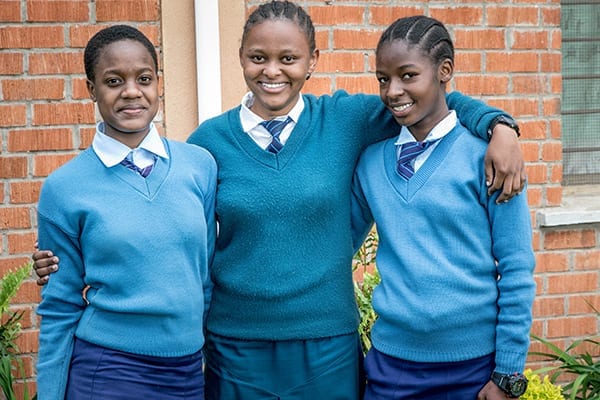
Gloria, one of our Form 6 students likes to help her “sisters” with the academic side of life at The School of St Jude.
“I teach them some difficult subjects they think they cannot do well and I advise them on the right path they can go through as youths”.
This is greatly appreciated. “The one thing I learnt from my sister is that she likes helping the younger ones. Like in class subjects she helps a lot, for example in mathematics!” Vanessa, Form 2, said.
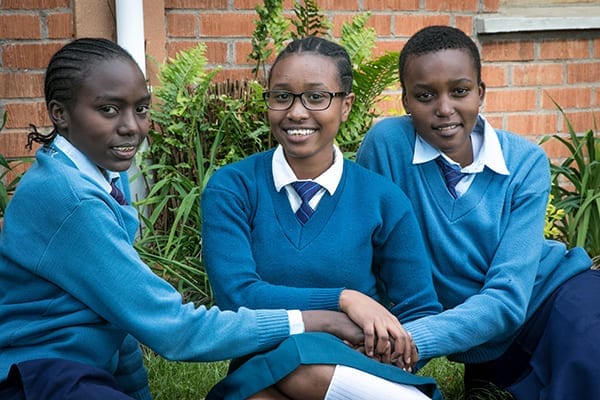
As well as academic success, personal skills such as confidence and team work are important for a St Jude’s student to succeed. This is greatly supported by the peer mentor program as Jackline, in Form 2 explains.
“I learn from my elder sister to be confident because at first I wasn’t confident to talk to all people but I learnt from her. The confidence I have now is from her”.
Students at the school learn many different skills from each other and sometimes the lessons come as a real surprise! Karisma’s was surprised to see her sister, Rahma Form 2 perform at Careers Day.
"From my sister I was inspired by her confidence. The Career day that she went to sing at; her voice was amazing!”
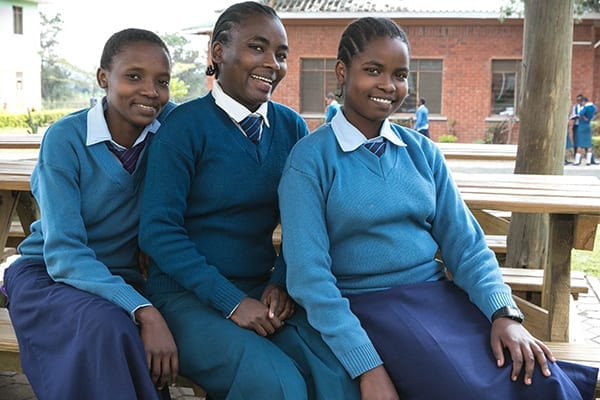
Peer mentors have also inspired their charges with their choice career path.
"The most inspirational thing about my little sisters is that at first I knew I loved children and the younger ones. Since I met them that passion has grown and I keep loving them every day" Gloria, said.
She is inspired to continue working with children, possibly as a teacher.
The shared learning and academic support is also an opportunity to have fun with a new friend. Kareen giggles as she remembers the program’s first day. She tried to stretch her arms over the much taller younger students in her care.
"The funniest day was the first day that I met my little sisters. They are tall and I am short!"
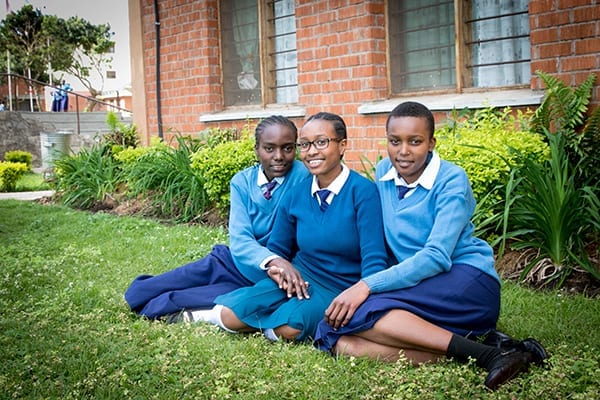
Vanessa remembers the fun her peer mentor friends have shared on the program. "We were playing chasing and she fell over!"
When asked if she helped her sister up off the ground her reply was immediate and delivered with the warmest smile, "Yes I did!"
Boys will also soon be a part of the peer mentoring program. As part of the Girls Welfare Team Pendo Jeremiah initially started the program just for the girls. However, she was soon approached by boys from Form 5 who wanted to be involved.
“The Form 5 boys approached me and said, it’s not fair that the girls get to do this, we want to have this program as well. So that is very good, we are happy when our students show responsibility and that they care about each other,” Pendo Jeremiah said.
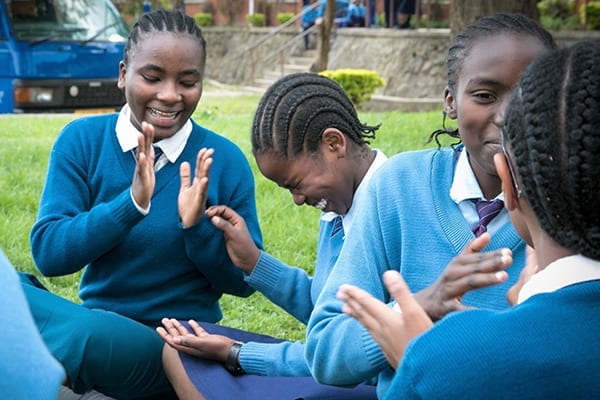
The shared support, laughter and inspiration enjoyed by our students show the peer mentor program to be a huge success! These strong friendships will be treasured memories of a happy time at The School of St Jude.
Support our quality learning environment by making a donation towards Learning Resources.
“A musician must make music, an artist must paint, a poet must write, if he is to be ultimately at peace with himself. What a man can be, he must be.” - Abraham H. Maslow
With this quote, Mr Mshauri, our impassioned career guidance counselor, opened St Jude’s Careers Day 2016!
This year’s theme: ‘Let your artistic talents become your career.’
Careers Day at St Jude’s always boasts an electric atmosphere of enthusiasm and ambition.
In 2016, the excitement was heightened as the celebration of career planning and opportunities was teamed with our annual Cultural Day exhibition.
“It is of the utmost importance that in this day, as with every day, you examine yourself, explore who you are and what you want to become,” Mr. Mshauri said in his opening address,“Tanzania needs you, the best you, you can be”.
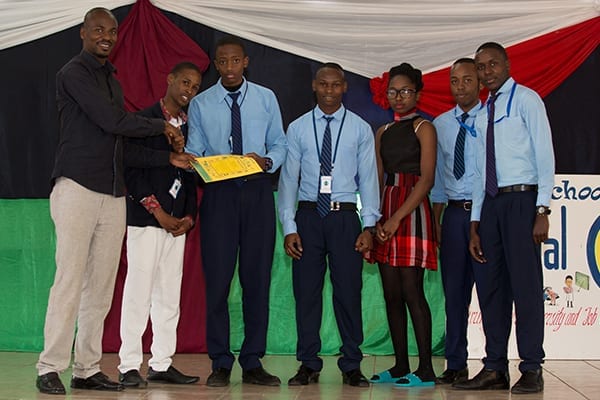
Mr Mshauri spoke on the different industries crying out for a new generation of skilled professionals in Tanzania, particularly national priority sectors such as agriculture, IT and tourism.
He beamed a broad, proud smile introducing the day’s key note speaker, Faith Marunda. Faith recently joined St Jude’s Visitors department after an impressive career across Tanzania’s tourism sector.
The young professional’s address captivated the crowd. Ms Marunda touched on her personal career accomplishments, the flexibility and opportunities available in Tanzanian tourism as well as the challenges facing the sector in the 21st century.
“Whether tourism is your dream or not, it accounts for 20% of our country’s Gross National Product and 90% of that is reliant on international visitors,” Faith said.
“So it is important that all of us in our careers consider our environment and act against climate change. It is all of our responsibility to make sure we conserve our general national brand to encourage sustainable tourism.”
Our students also presented on employment prospects in Tanzania and their own entrepreneurial endeavors.
The most enterprising individuals hosted booths exploring journalism and new media, music production, graphic design, screen printing, architecture, engineering and self-employment.
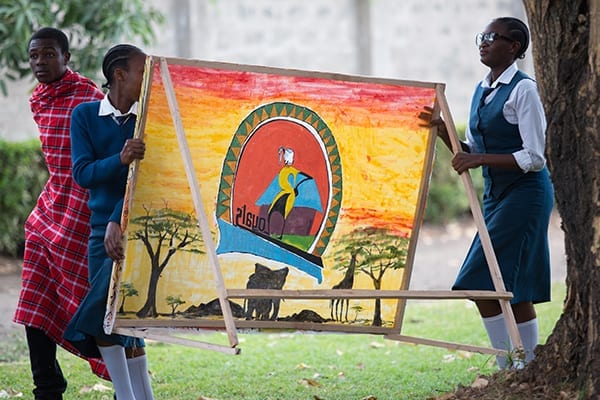
Olson in Form 6 said the day has always been a highlight on the academic calendar.
“We get to meet different people with different careers like doctors and engineers and ask them how is their work, how is their career? And we get a much better understanding of different career paths from those discussions.”
“For me it is difficult because I want to do everything. I want to study anesthetics and also something to do with chemical engineering,” Olson said.
“That is why this day is so good for me. Here at St Jude’s there is everything that a person like me should need to get answers for all the career questions that I have.”
If you want to support our students to become the best they can be – donate today.
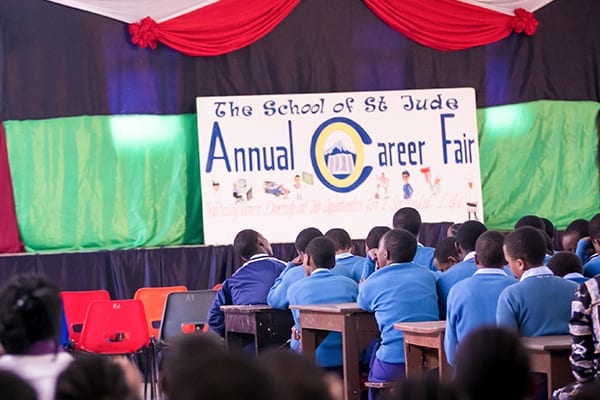
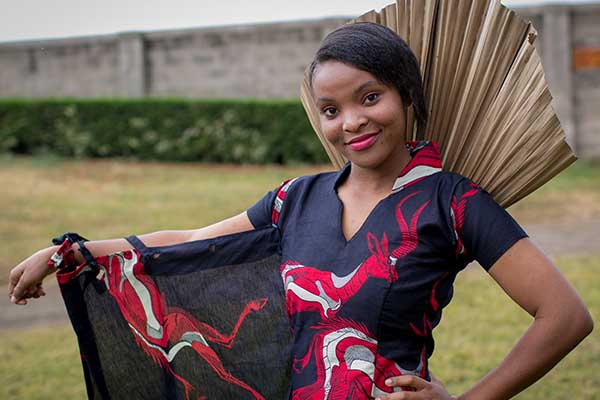
St Jude’s recently celebrated our 7th Annual Cultural Day!
For Cultural Day 2016, our students are letting you know what you should (but probably don’t) know about Tanzanian culture.
“People may know that we have many different tribes with their own traditions, like Maasai, but what they don’t know is that unlike other countries, people in Tanzania are not limited in showing their different cultures. We combine so many different traditions to make one very good national culture.” - Evance, Form 4
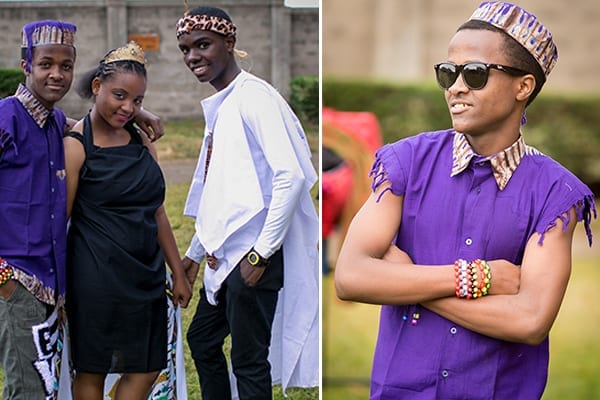
What do you want people to know about Tanzanian culture?
Environment
Tanzania is known for the highest mountain in Africa, Mt Kilimanjaro, the Cradle of Mankind, Olduvai Gorge, and of course the Serengeti.
“I think that people should know how Tanzanian culture is very close to nature, most cultural things are made of nature, handmade and derived from the environment in which people live,” Evance said.
“We have the most protected natural areas and national parks in the world and the most precious wood in our mpingo tree.”
Community
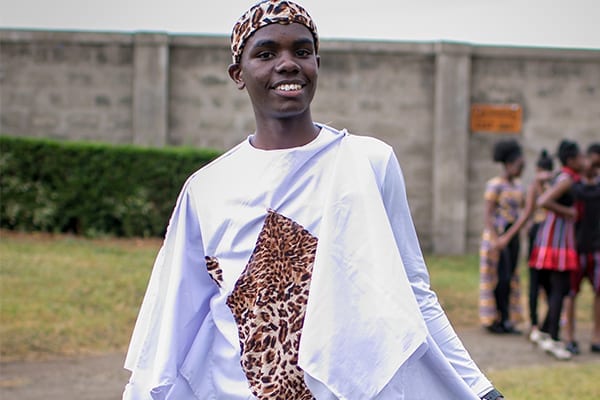
The literal translation of the Swahili word 'undugu' is 'relative', but our students say it means much more than that.
“The most important part of our culture is community, we are all joined together,” Evance said.
“If you get successful you should help those that are behind you so you can also bring them to success. That is the meaning of our word undugu – we should all be like lights to each other.”
Language
There are over 120 languages spoken in Tanzania. Swahili is the most spoken language, as well as the most spoken African language on the continent.
“I wish more people from outside knew Tanzanian culture through our shared language, it is so special. Our food and dressing style, they can see when they visit, but Swahili is so beautiful, it gives shape to our shared culture and is so full of respect and goodness,” Robert in Form 4 said.
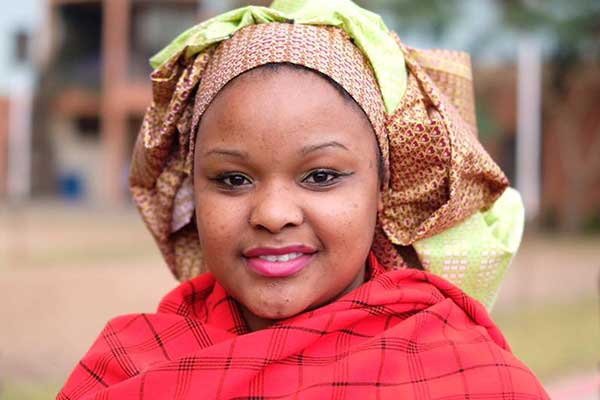
“For example when you meet someone who is older and that you should respect, you say ‘shikamoo’. Its meaning is ‘I kneel to you’.”
Respect for elders
Honor the elders, even if they are not yours. - Swahili proverb
“It is our culture to respect elders and it is good because they know many things that you do not know yet and they can teach you good and bad things,” Pascal in Form 4 said.
“Our culture is firstly about respect. This means that different religions and classes have peace between each other. It is not possible for fights to happen with other countries because of our culture of respect, everything is settled within ourselves,” Rehema in Form 4 said.
Politics
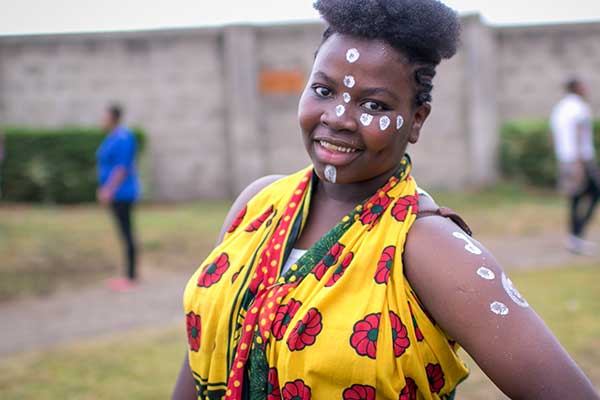
Tanzania’s first President Julius Kambarage Nyerere, was known as Baba wa Taifa – Father of the Nation. Nyerere was a key player in forming the Organisation of African Unity, which later became the African Union.
“Other countries in the world, when they got independence there was fighting and wars. Tanzania, ever since independence, has been peaceful, there is respect between tribes and religions,” Shani in Form 1 said.
“This is because of the great Julius Nyerere, the father of our nation. He wanted us all to have peace, be proud of our culture and be Tanzanian first and together.”
Travel through time and join us for Cultural Day 2016: Flip through our Flickr album.
Last year, our students, who represent 61 of over 130 tribes in Tanzania, shared some of their respective cultural backgrounds with you.
If you’d like to learn more about Tanzanian culture from our students or see Cultural Day 2017 for yourself – come visit us!